

Does medical cannabis really help? “Anti-ageing and increased mental capacity through cannabis” and no, “medical marijuana does not harm the psyche”. On the contrary, current studies “suggest that THC could ‘rejuvenate’ the brain”. In Germany, around 6.1% of the population between the ages of 18 and 64 consume cannabis (source: CaPRis, Federal Government). A look at current study results! Let’s start with this current study by the University of Bonn with interesting findings:
70-90 % patient success

Cannabisärztin erklärt Extrakt.
New meta-analysis 2025 – Current reviews from 2025 show: 70 to 90 percent of patients report an improvement in their symptoms with medicinal cannabis. Cannabis containing THC appears to play a particularly important role in pain, sleep disorders and nausea. At the same time, researchers point out that many studies have methodological weaknesses – an area of tension that we should take a closer look at.
Status: 2025
Terpenes and their influence on diseases

Nahaufnahme, Cannabisblüte und Terpene
Russo, Komiya et al., Gertsch – Terpenes are natural aromatic substances in the cannabis plant. In addition to their characteristic scent, they also contribute to the medicinal effect – especially in combination with cannabinoids such as THC or CBD. Many terpenes have anti-inflammatory, pain-relieving or calming properties. Research into their therapeutic potential is still in its infancy, but is already yielding promising results. From our section: Cannabis studies.
- Terpenes: What are they?
- Terpenes and diseases
Status: 2025
Pain-free in old age: seniors
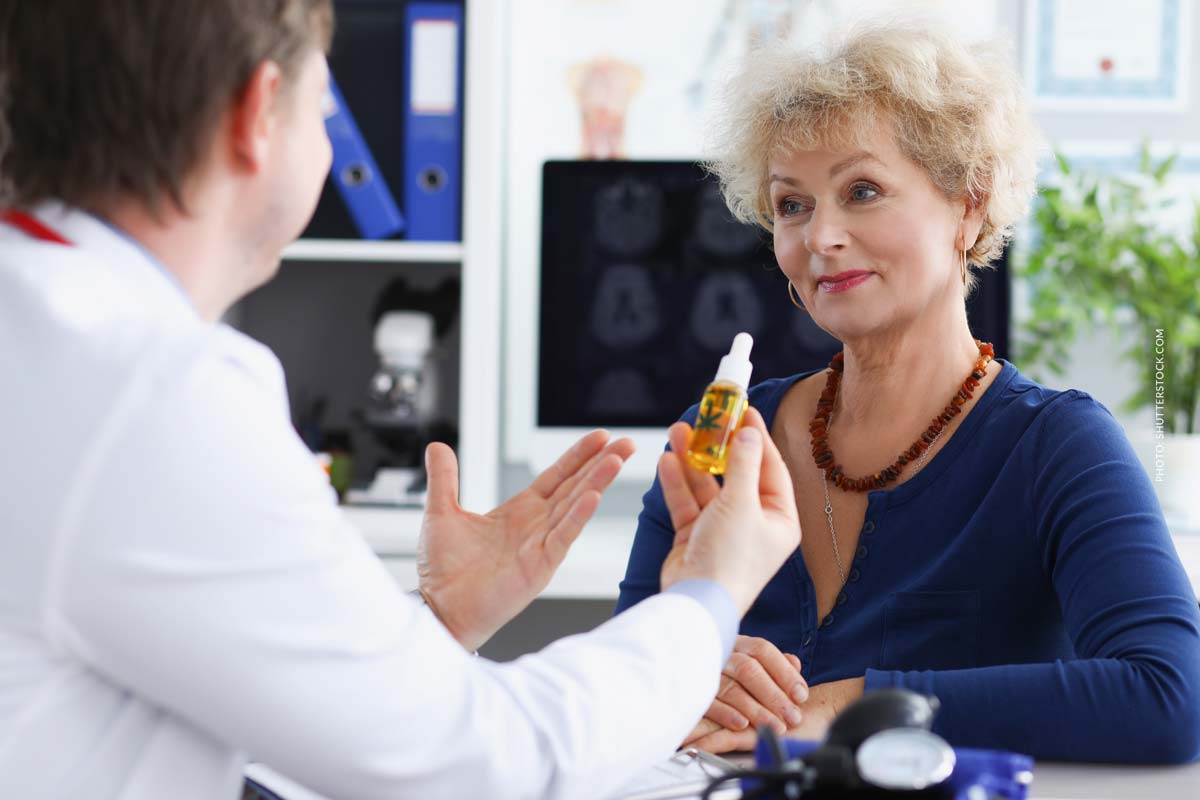
Seniorin bei ärztlicher Beratung über Cannabisextrakt
BFARM – More and more older people are discovering cannabis as a serious alternative to traditional pain therapy. New data shows that the trend is increasing significantly in Germany – especially among patients for whom conventional medication fails.
The study clearly shows how widespread the medical application has become.
- Average age: 57 years
- 76.4 percent use cannabis specifically for pain
- It is also used for sleep problems and nausea
- On the results: Senior citizens switch to cannabis prescription
Status: 2025
“Anti-ageing and increased mental capacity through cannabis”
 University of Bonn – Anti-aging and increased mental capacity through cannabis? These study results are surprising! A recent study by the University of Bonn shows surprising results on the effect of cannabis on the brain. The researchers found that long-term, low-dose administration of THC, the main active ingredient in cannabis, can have a so-called anti-ageing effect (slowing down the ageing process) on the brain. This discovery could open up new avenues for the treatment of age-related mental impairment.
Let’s take a look at the details of the study.
Status: 2024
“Medical marijuana does not harm the psyche”
 University of Basel – A recent study by the University of Basel shows that the use of marijuana for medical purposes, such as pain relief, has no negative effects on mental health. This comprehensive study is based on data from the USA, where medical cannabis has been available since the 1990s. The researchers analyzed the mental health of patients in US states where medical marijuana is prescribed and found that the number of days with “poor mental health” was slightly reduced among users. The average improvement was about 0.3 days per month.
Medical marijuana has also been approved in Germany since 2017, primarily for the treatment of chronic pain, spasticity and loss of appetite.
More about the study:
Status: 2024
“Cannabis: potential and risks”

Federal government – Potential and risks (CaPRis) of cannabis, the official paper of the federal government. We take a look at the results of the study, more specifically, what risks and opportunities are associated with cannabis. The CaPRis study sheds light on the prevalence, the health consequences of recreational use and the therapeutic potential of cannabis for various diseases – and provides valuable insights into the current study situation.
To the study:
Status: 2017
Multiple sclerosis and cannabis
The effectiveness of THC in MS has been comparatively well researched. A large randomized study with over 600 patients(CAMS study) showed that preparations containing THC were able to significantly reduce muscle stiffness. A follow-up study also showed that long-term users experienced a further improvement in symptoms. Meta-analyses also confirm the effectiveness, particularly for spasticity and chronic pain(Whiting et al., 2015).
Status: 2015
Cannabis patients in Germany
- Cannabis consumption habits
- Cannabis patients age
- Cannabis patients diseases
Cannabis consumption habits
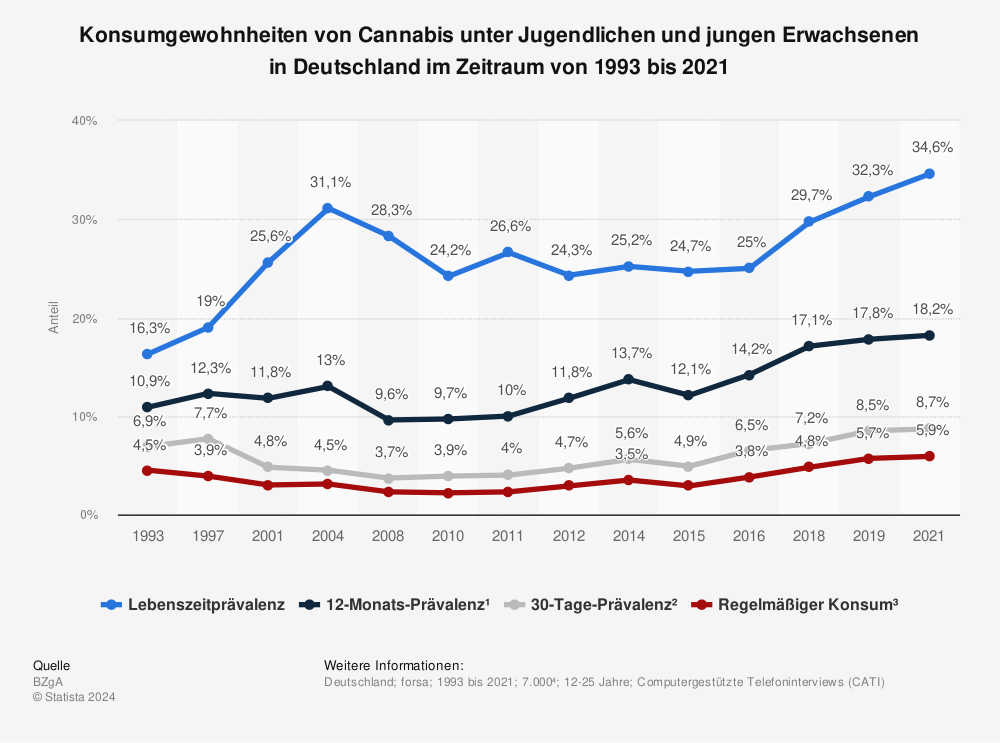
Here you can see the cannabis consumption habits of adolescents and young adults in Germany from 1993 to 2021.
The use of cannabis among adolescents and young adults in Germany has increased since 1993. Lifetime prevalence in particular has increased significantly and stands at 34.6% in 2021. The 12-month and 30-day prevalence as well as regular use also show an increasing trend, with regular use being the lowest at 5.9% in 2021.
The facts:
- Lifetime prevalence: peak at 34.6%
- 12-month prevalence: Reaches 18.2%
- 30-day prevalence: slightly increasing, 8.7%
- Regular consumption: Consistently low, 5.9%
Patient age groups
Medical cannabis is used today by a wide range of age groups. However, the idea that these are mainly young users persists. Our latest analysis shows: Although the largest user group is between the ages of 20 and 40, older patients are also increasingly beginning to discover medicinal cannabis for themselves.
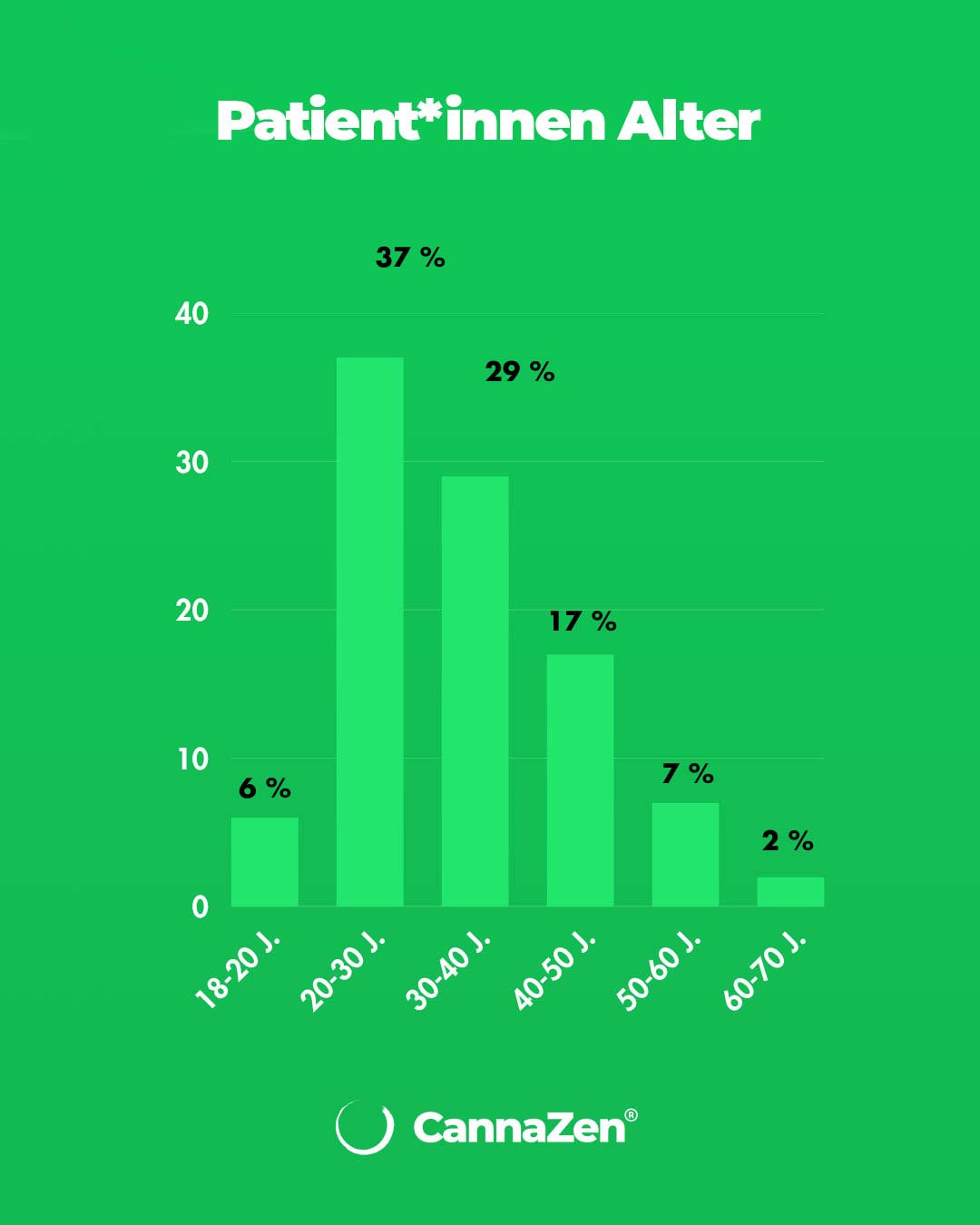
Infografik: Cannabis Rezept bei Altersgruppen (CannaZen 08/25)
Patient diseases
Medicinal cannabis is used to treat a wide variety of illnesses. But which symptoms and diagnoses are actually the main focus? A recent analysis shows that sleep disorders are by far the most common reason for use. Chronic pain, migraines and psychological stress also play a central role. Read more here:
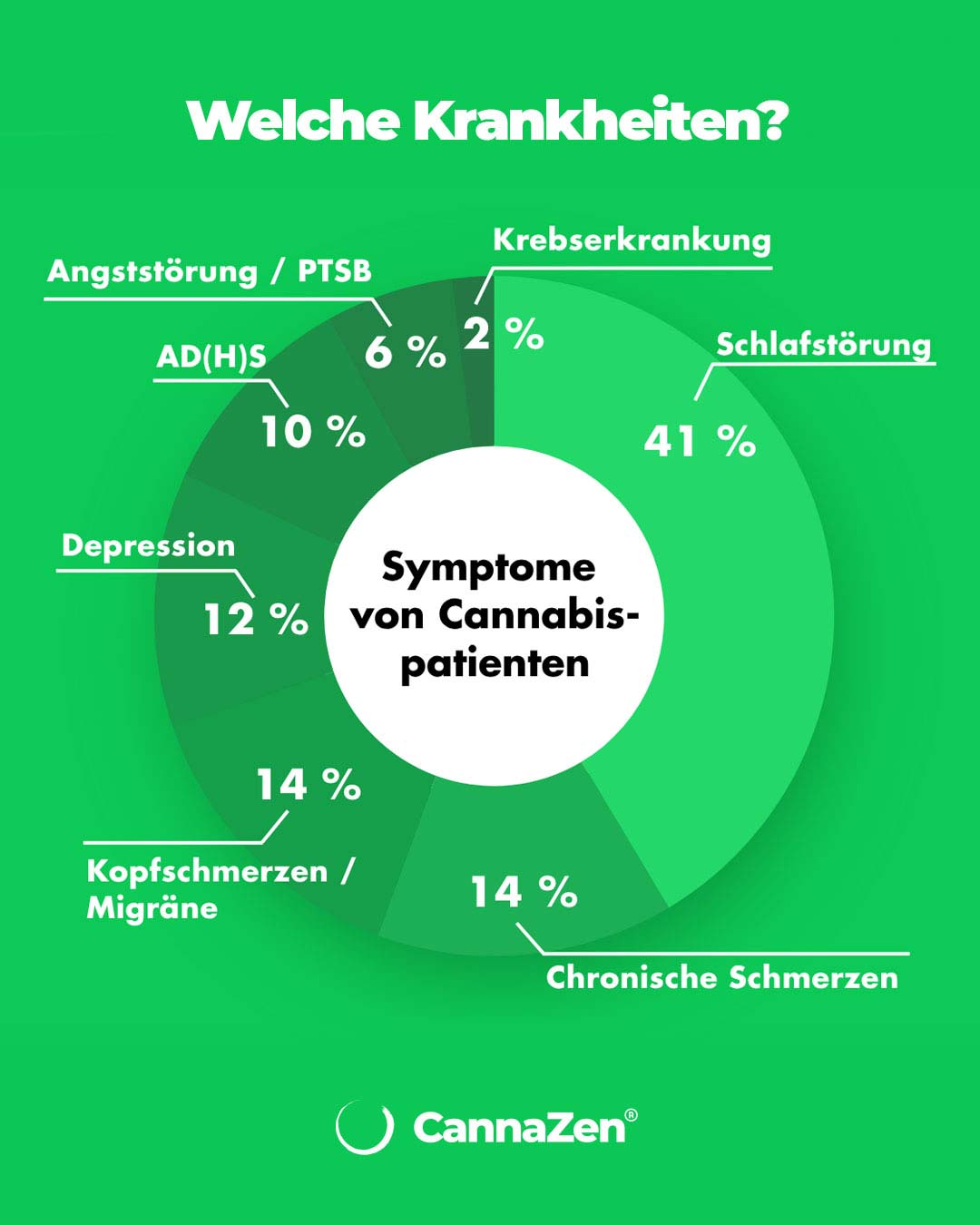
Infografik: Cannabis Rezept bei Krankheiten (CannaZen 08/25)
Telemedicine in Europe
 WHO – Telemedicine is developing rapidly in Europe – with countries such as France, Denmark and Estonia leading the way. Germany, on the other hand, is lagging far behind. Studies by the WHO, Deloitte and the Bertelsmann Stiftung show why this is the case, what advantages digital healthcare offers and what needs to be done to catch up.
- WHO studies,
- Deloitte,
- Bertelsmann Foundation
Read more here: