Cannabis effect explained

Cannabis Wirkung & Effekt
Cannabis affects the body and mind through a complex interplay of different ingredients. The effects depend not only on the THC content (mainly Δ9-THC), but also on other cannabinoids, terpenes, trichomes, pistils and the type of consumption. The so-called entourage effect also plays a decisive role. Learn here how all factors interact and influence the effects of cannabis.
Endocannabinoid system
The effect of cannabis is due to the binding of its active ingredients to the endocannabinoid system (ECS). This system controls important bodily functions such as mood, pain perception, appetite, sleep and the immune system. Cannabinoids such as THC and CBD bind to special receptors and thus trigger different effects.
So let’s start with the endocannabinoid system.
Cannabinoids: the main active ingredients
Cannabinoide in Cannabis
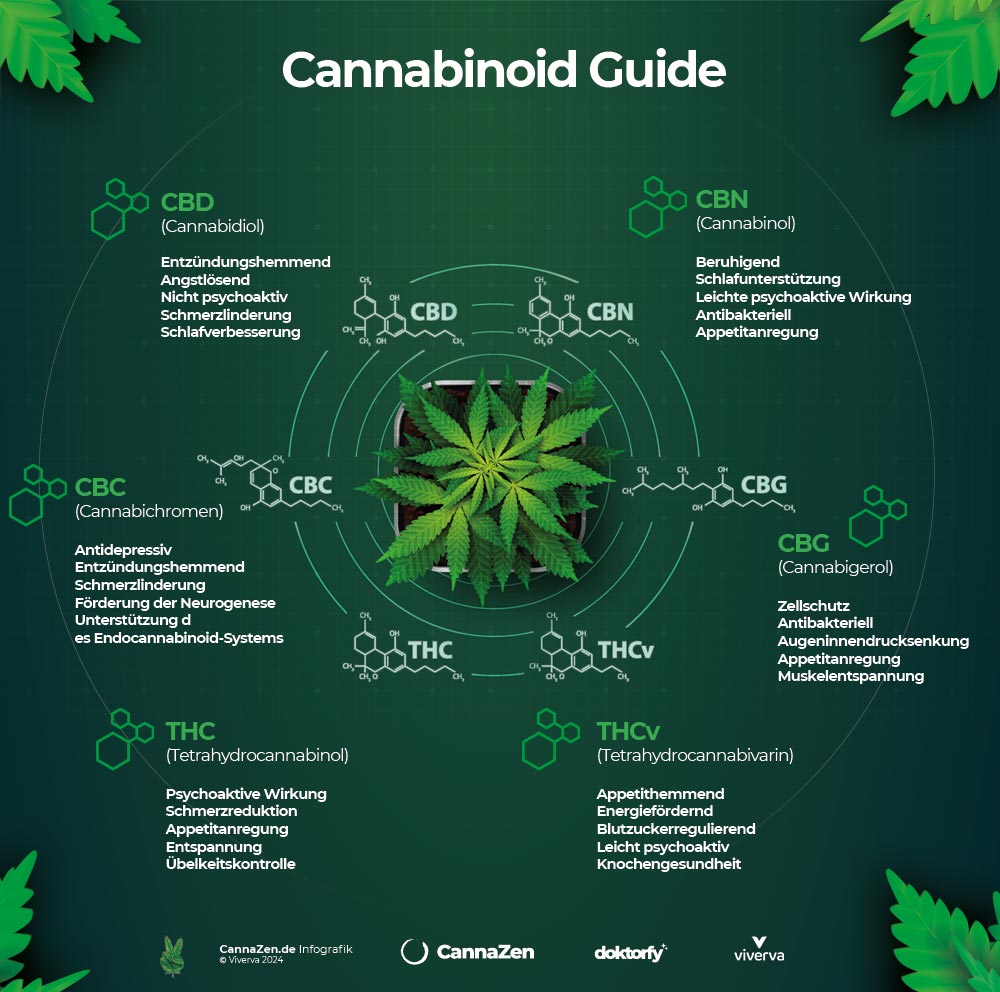
There are over 100+ different cannabinoids in cannabis. Discovered by Dr. Raphael Mechoulam in the 1960s. The best known are THC and CBD, but others also play a role. They determine how strong, how long and in what form cannabis works.
THC (tetrahydrocannabinol)
THC is the main psychoactive ingredient and is responsible for the typical “high”. It binds to CB1 receptors in the brain and alters perception and mood.
- Feeling of euphoria and happiness
- Increased sensory perceptions
- Increase in appetite (“munchies”)
- Muscle relaxation
- In higher doses: fear or paranoia
CBD (cannabidiol)
CBD is not intoxicating and can partially mitigate the effects of THC. It binds to CB2 receptors and is often used medicinally.
- Anti-inflammatory and pain-relieving
- Anxiety-relieving and calming
- Helpful for sleep disorders
- Supportive for epilepsy
Other important cannabinoids
In addition to THC and CBD, there are other cannabinoids that influence the effect:
Terpenes: aromatic substances with an effect
Terpenes are essential oils that give cannabis its smell and taste. At the same time, they significantly influence the effect. Depending on the terpene profile, a strain can have a relaxing, stimulating or creativity-enhancing effect.
Examples of important terpenes
- Myrcene: promotes deep relaxation, enhances THC
- Limonene: mood-enhancing, invigorating, often in fruity varieties
- Linalool: calming, anxiety-relieving, known from lavender
- Pinenes: increase alertness and improve memory
- Caryophyllene: anti-inflammatory, spicy-peppery aroma
Trichomes: The active ingredient factories
Infografik: Pistillen, Trichome und Terpene
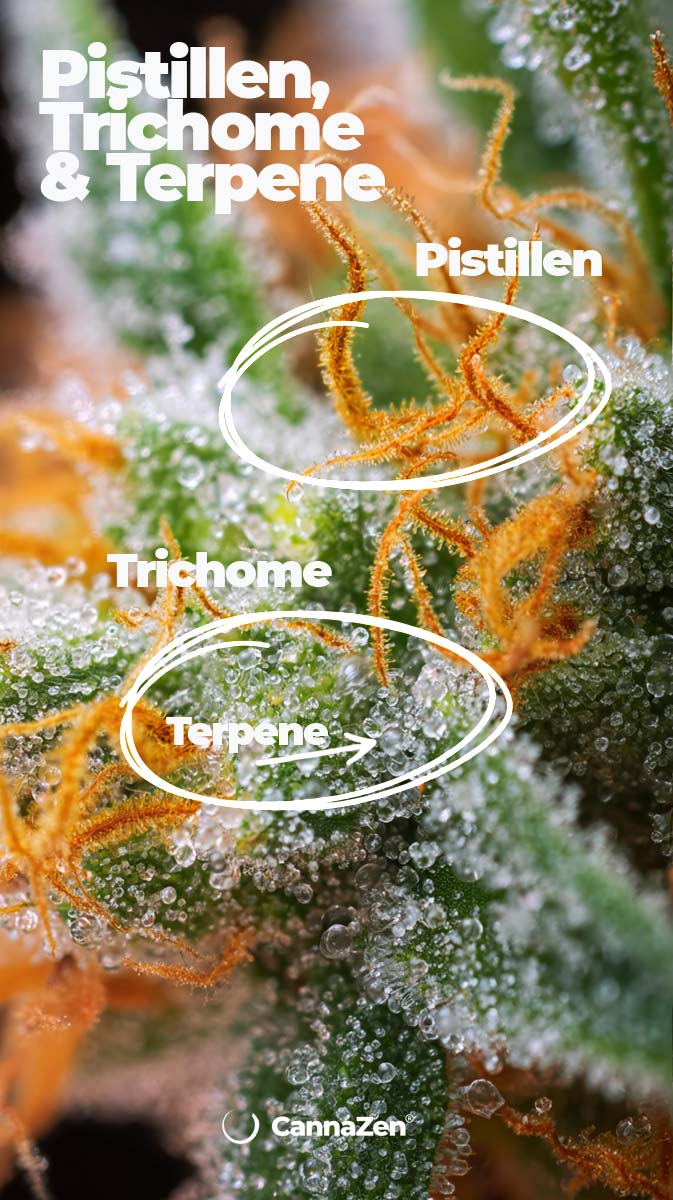
Trichomes are tiny resin glands on the flowers that contain most of the cannabinoids and terpenes. The more trichomes, the more potent the strain. The color of the trichomes indicates the effect:
- Clear: immature, less effective
- Milky: maximum potency and balanced effects
- Amber: rather calming, sedative effect
Pistils: Maturity indicator of the flower
Pistils are the hair-like threads on the flowers. They have no direct influence on the effect, but indicate the degree of ripeness and thus indirectly the cannabinoid and terpene composition.
- White pestles: Plant is still immature
- Orange-brown pistils: Plant fully mature
The entourage effect
The effect of cannabis is created by the interaction of all ingredients. Cannabinoids, terpenes and other compounds influence each other. This is why two strains with an identical THC content can have completely different effects. One strain may be more sedative, the other activating – depending on the interaction of the active ingredients.
The effect of cannabis cannot be reduced to THC alone. Cannabinoids, terpenes, trichomes, pistils, degree of maturity and form of consumption together determine how the effect is perceived. The entourage effect ensures that each strain develops its own unique effect.
Form of consumption and effect
The type of consumption also changes the effect, the onset and the duration of the effects:
- Smoking or vaping: effect starts after 1-5 minutes, lasts 2-4 hours
- Edibles (e.g. cookies): Effect starts after 30-90 minutes, lasts up to 8 hours
- Oils or extracts: precise dosing possible, effect often milder and more controlled