CBCA, cannabichromenic acid, is the natural precursor of the cannabinoid CBC (cannabichromene) and is mainly found in fresh, untreated cannabis flowers. Heat or UV light converts CBCA into CBC – this step is called decarboxylation. Why is CBCA exciting, how does it work in the body and what role does it play alongside THC, CBD, CBG and CBN? Back to overview: Cannabinoids & effects.
CBCA: What exactly is that?
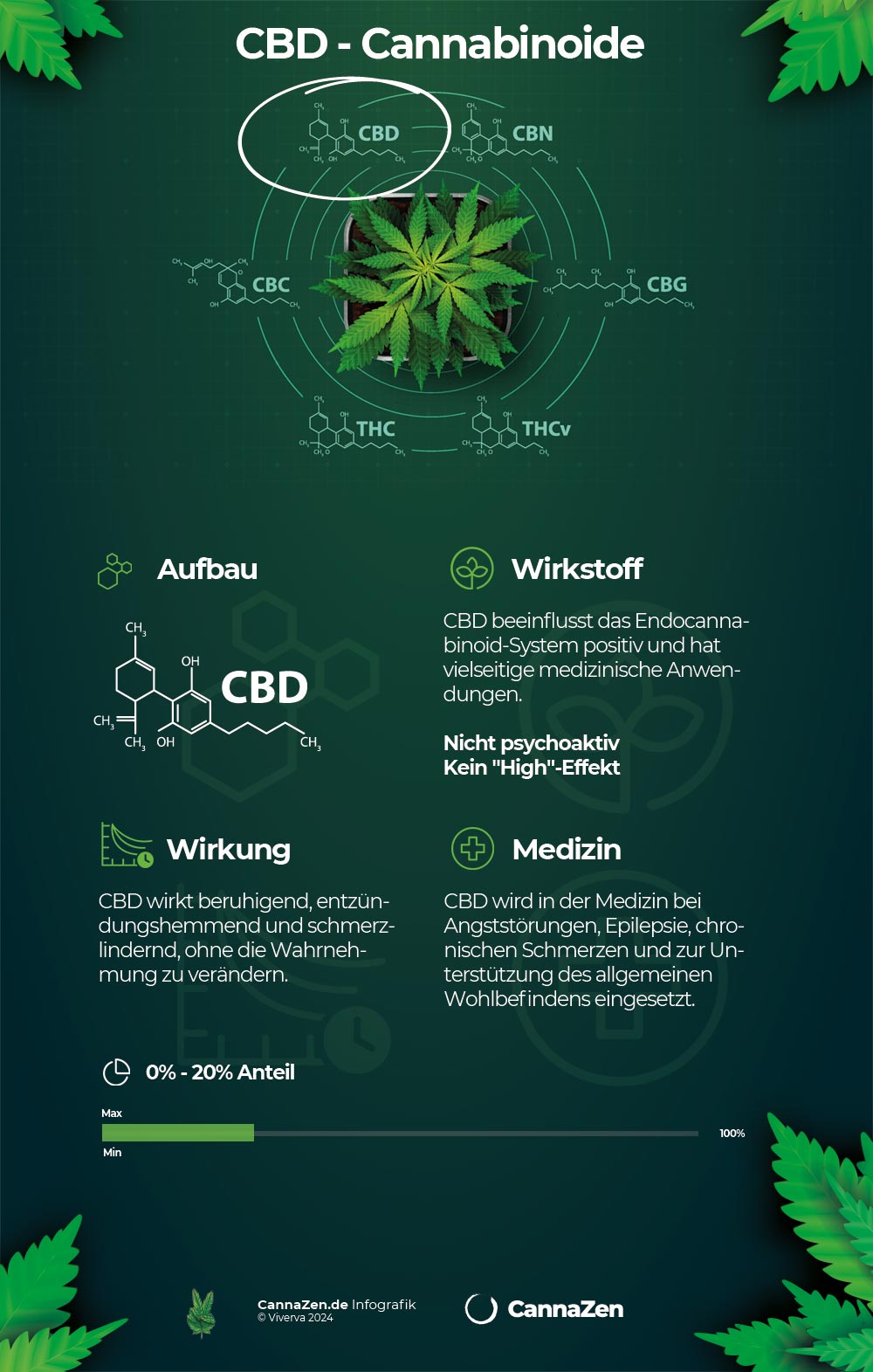
Cannabinoide in Cannabis: CBCA → CBD
CBCA stands for cannabichromenic acid and is a non-psychoactive cannabinoid in the cannabis plant. Like CBDA (precursor of CBD) and CBGA (precursor of many cannabinoids), it is formed early in the plant cycle and remains stable in raw flowers. Only heat, time or light remove the acid group so that CBCA becomes the active CBC. This is relevant for medicine because the raw form (CBCA) and decarboxylated form (CBC) can have different profiles.
- CBCA stands for cannabichromenic acid
- Natural precursor of CBC (cannabichromene)
- Non-psychoactive; particularly high in fresh flowers
CBCA content in flowers
The CBCA content depends on the variety and harvest and is mainly found in fresh, unheated cannabis flowers. During drying and storage, some CBC can be converted to CBC, especially when exposed to heat and light. Manufacturers today use targeted processing to obtain CBCA in raw extracts or to deliberately decarboxylate it to CBC, depending on the therapeutic goal.
Fun fact: “Raw cannabinoids” such as CBCA, CBDA and CBGA dominate in fresh plant material – only heating shifts the ratio to CBC, CBD and THC.
How CBCA works in the body

Wirkung von Cannabis, Beispiel CBCA
Like other acidic cannabinoids, CBCA binds only weakly to classic CB1/CB2 receptors of the endocannabinoid system. Indirect effects via enzymes and messenger substances, which can have an effect on inflammatory processes, skin, intestine and nervous system, are much more exciting. For CBC, the decarboxylated form, additional pain-relieving, anti-inflammatory and skin-related effects (e.g. sebum regulation) are being discussed – CBCA provides the precursor for this.
- Not psychoactive, rather regulating
- Indirect effects on inflammation and skin processes
- Precursor of CBC with potential analgesic profile
How long CBCA works
The perception and duration strongly depend on the form. Raw CBCA extracts usually have a gentle and even effect, especially when administered orally. When heated (vaporizer, baking, cooking), CBCA decarboxylates to CBC – the effect then sets in more quickly, but can last two to four hours depending on the dose; taken orally, it often lasts longer.
Cannabinoids in comparison
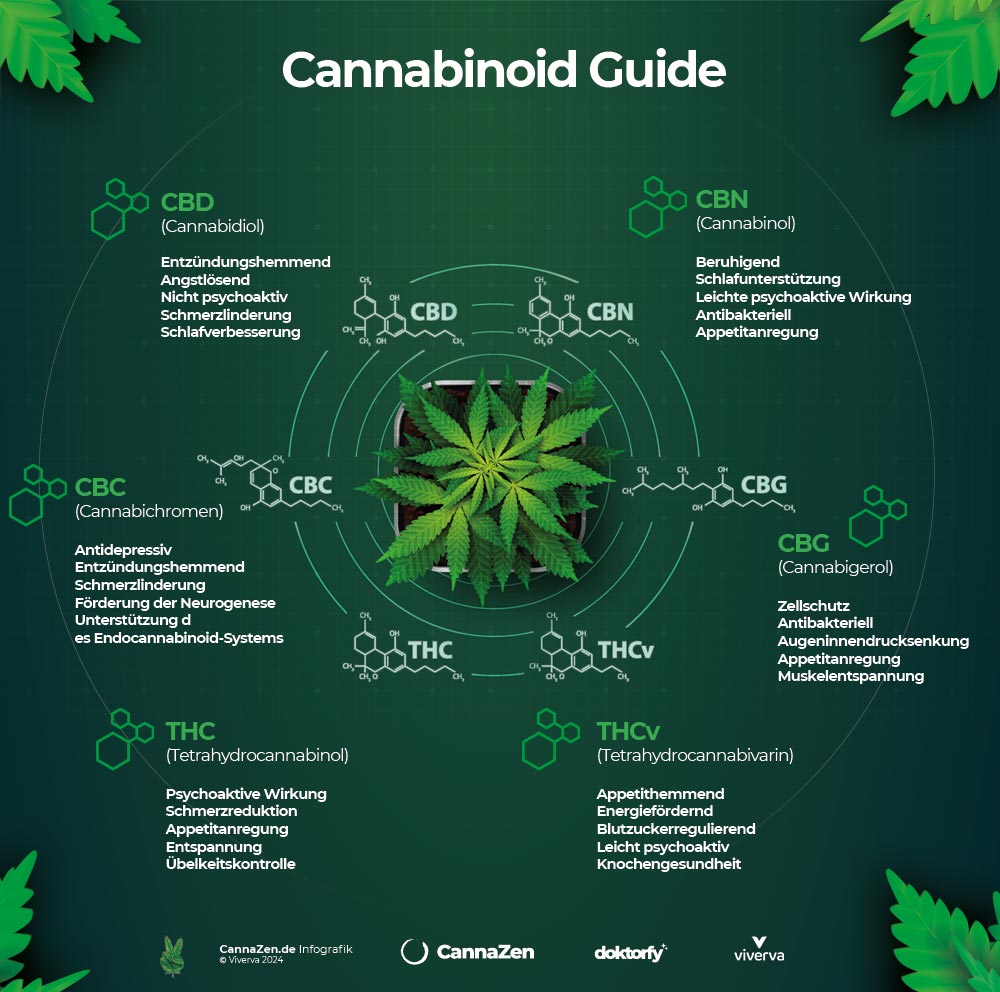
Cannabinoide in Cannabis
Cannabinoids characterize the effect and use of the plant. While THC is psychoactive and CBD has a relaxing and anti-inflammatory effect, CBCA is the precursor for CBC – with a focus on non-psychoactive, regulating properties. Together with CBG/CBGA and CBN, this results in a broad spectrum that is used in a targeted manner depending on the ratio.
CBCA is the link to the “CBC world”: raw, stable, gently regulating – decarboxylated to a more active, non-psychoactive profile.
- THC: psychoactive, euphoric
- CBD: relaxing, anti-inflammatory
- CBCA/CBC: regulating, potentially anti-inflammatory
Entourage effect and CBCA
In the “entourage effect“, CBCA interacts with other cannabinoids and terpenes, which can influence effect and tolerance. In medicinal flowers and extracts, raw formulas (CBCA) and decarboxylated profiles (CBC) are therefore often used to more specifically address inflammatory complaints, skin issues or mild pain.
For patients looking for a non-psychoactive, gentle option, CBCA-rich raw extracts or CBC-oriented formulations – depending on the goal – can be a useful addition to classic THC/CBD products.
Cannabis effects: cannabinoids, terpenes and genetics
Cannabinoids, terpenes and genetics: Learn everything you need to know about medicinal cannabis on CannaZen.
- How does cannabis work?
- Cannabinoids (effect)
- Main active ingredients: THC(Δ9-THC) and CBD
- Terpenes (aroma and effect)
- Genetics (Sativa, Indica and hybrids)