CBL is one of the lesser known cannabinoids in the cannabis plant and is produced by the natural breakdown of other active ingredients such as CBC. It is not psychoactive, but could have interesting medicinal properties. But what exactly is CBL, how is it produced and what role does it play in cannabis flowers? Here you can find out everything you need to know: from its origins and effects to possible therapeutic applications and the selection of flowers and extracts. Back to overview: Cannabinoids & effects.
CBL: What exactly is that?
Cannabinoid Übersicht
CBL stands for cannabicyclol and belongs to the so-called degradation cannabinoids. It is produced when the cannabinoid CBC is chemically altered by light or heat. This is why CBL is found particularly in older or heavily dried cannabis flowers.
Although CBL has so far only been found in small quantities in most varieties, it is increasingly being researched. Initial studies indicate potential anti-inflammatory and antioxidant properties that could be of interest for medical applications in the future.
- CBL stands for cannabicyclol
- Arises from the degradation of CBC
- Could have medical effects
CBL content in flowers: why it is rare
Only very small amounts of CBL are found in fresh cannabis flowers, usually less than 0.5%. As CBL is produced by the decomposition of CBC, its content only increases with increasing storage, exposure to light or heating. Specialized cultivars with a deliberately increased CBL content are currently still rare, but could be in greater demand in the future.
Did you know? CBL belongs to the so-called “secondary cannabinoids” – compounds that are only formed through the ageing or conversion of other cannabinoids.
How CBL works in the body

Wirkung von Cannabis, Beispiel Entzündungshemmung
CBL does not interact strongly with the classic CB1 or CB2 receptors of the endocannabinoid system, which is why it does not trigger any intoxicating effects. Instead, it could have an indirect effect on signaling pathways that regulate inflammation and oxidative processes. Initial research results are promising, but further clinical studies are still needed.
- Does not have a psychoactive effect
- Could be anti-inflammatory
- Currently being intensively researched
CBL and antioxidant effect
The possible role of CBL as an antioxidant is particularly interesting. It could help to neutralize free radicals in the body and protect cells from oxidative stress. This property could be used in the long term for the prevention of diseases and the protection of nerve cells.
Studies on CBL
CBL compared to THC, CBC and CBG
Cannabinoide Übersicht
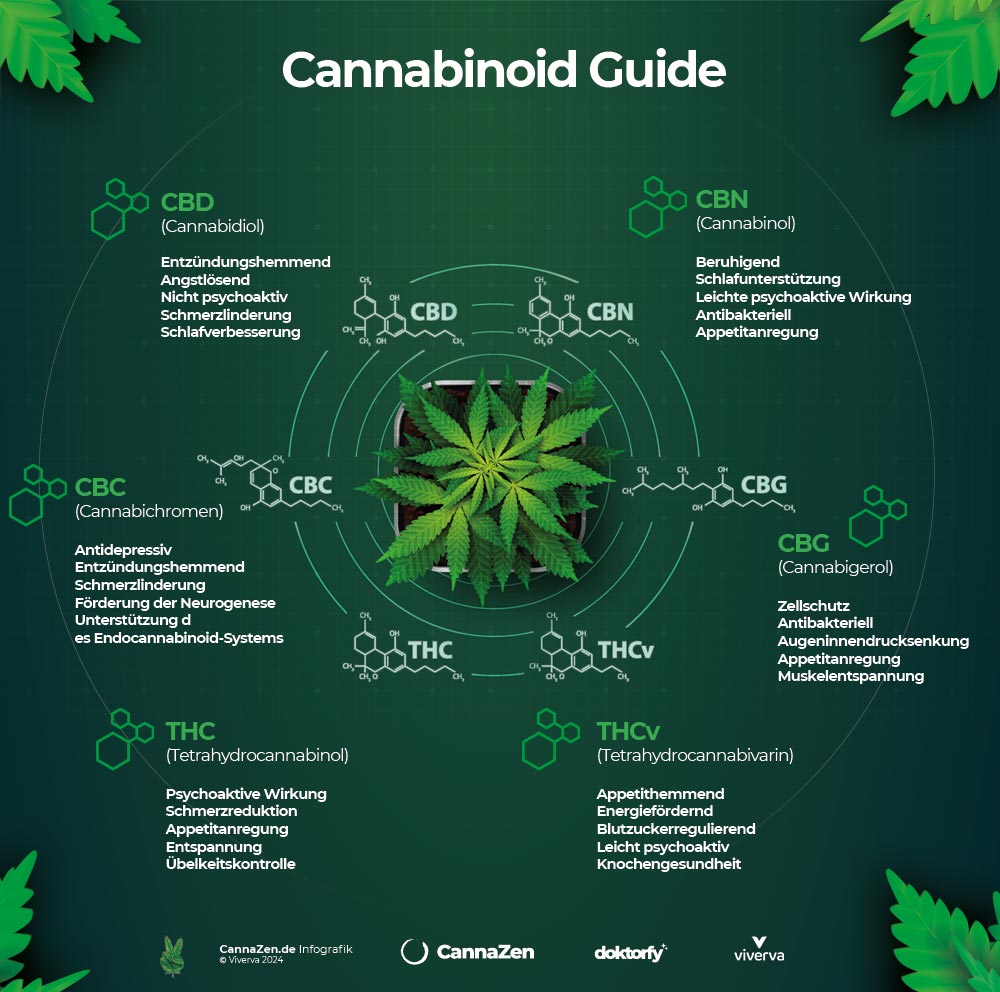
Cannabinoids such as THC, CBD, CBC, CBG and CBL differ greatly in their effects. While THC is psychoactive and CBD has a relaxing effect, CBL remains largely inconspicuous, but could be of medical interest due to its antioxidant and anti-inflammatory properties.
CBL is not a cannabinoid that gets you “high” – instead, the focus is on its potential health benefits.
Remember CBL and its special features:
- CBL is created by the degradation of CBC
- Does not have a psychoactive effect
- Could have antioxidant and anti-inflammatory effects
CBL and the entourage effect
CBL could also be involved in the so-called “entourage effect“. In combination with CBD, CBC and other cannabinoids, it could complement and enhance the overall effect of flowers and extracts.
This makes CBL a rare but exciting cannabinoid that could play a greater role in medical research in the future.
Cannabis effects: cannabinoids, terpenes and genetics
Cannabinoids, terpenes and genetics: Learn everything you need to know about medicinal cannabis on CannaZen.
- How does cannabis work?
- Cannabinoids (effect)
- Main active ingredients: THC(Δ9-THC) and CBD
- Terpenes (aroma and effect)
- Genetics (Sativa, Indica and hybrids)