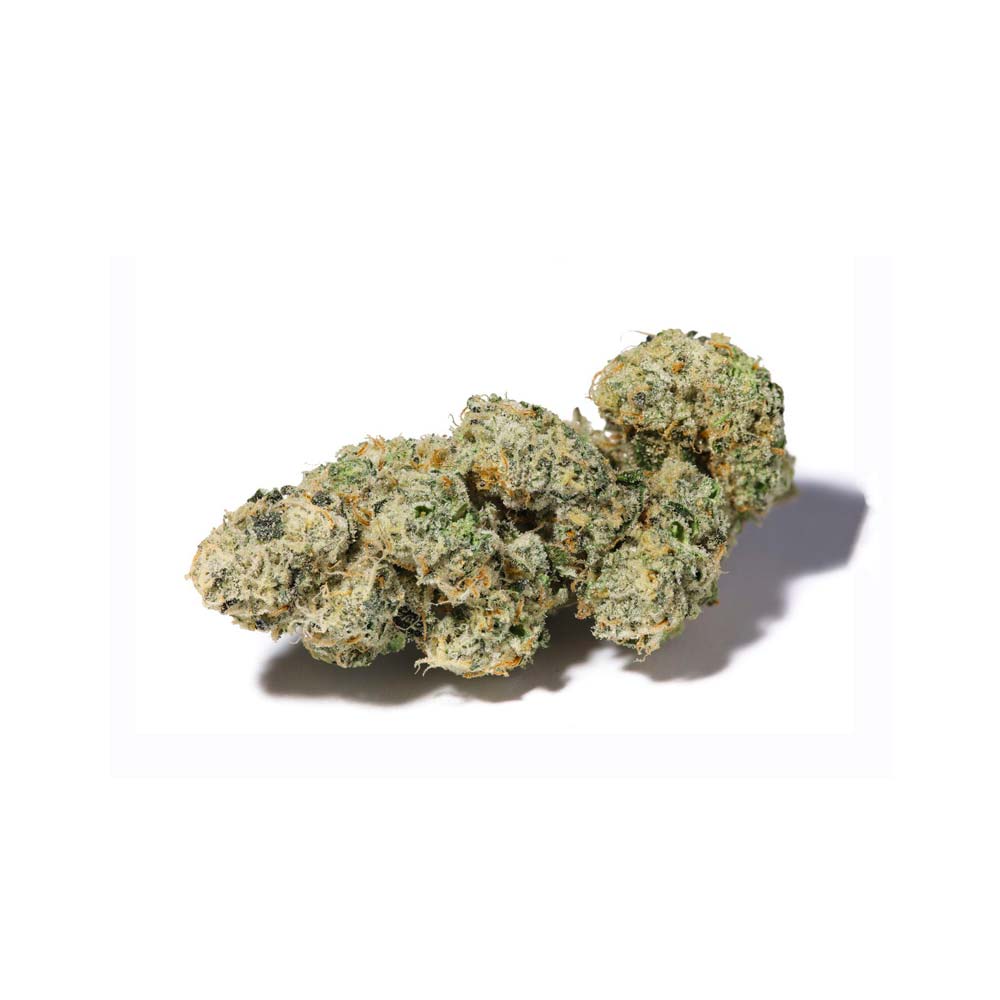
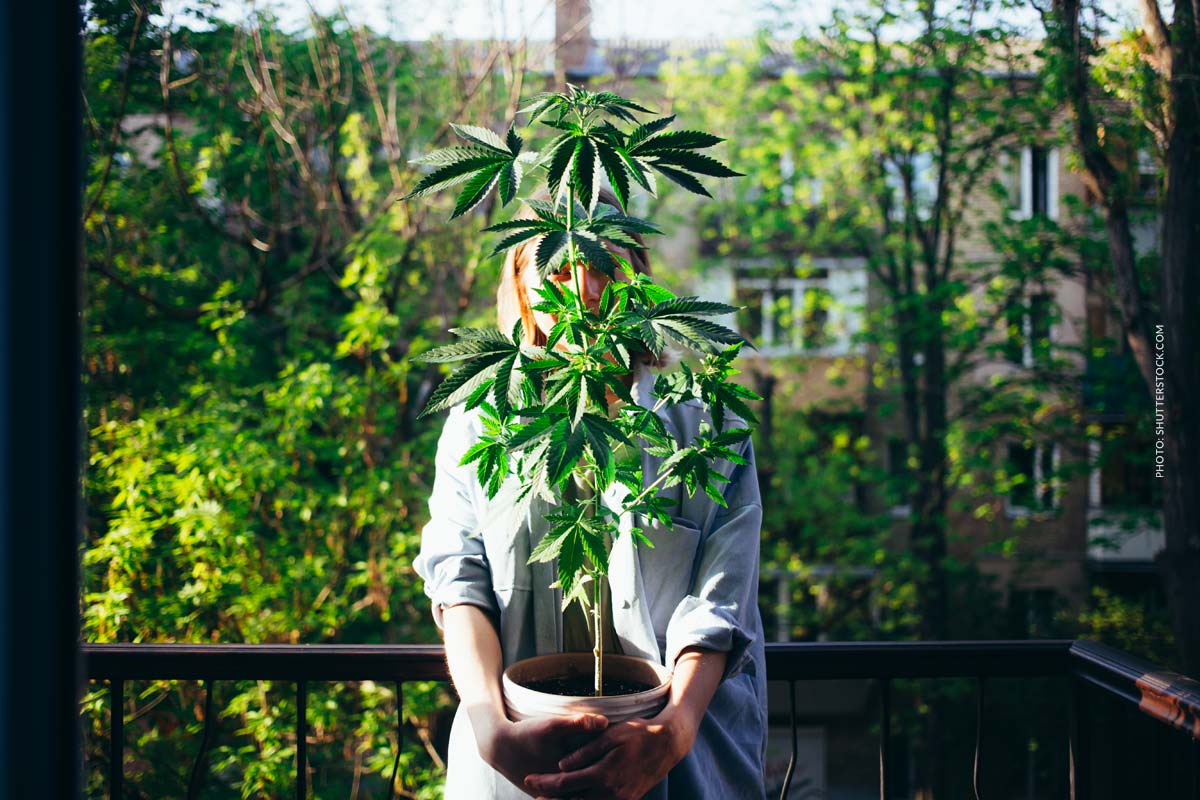
The cannabis plant is the basis of every subsequent cannabis flower and provides the active ingredients that are used in medicine. Terms such as THC, CBD, terpenes, genetics and the flowering phase often crop up – but what actually makes up the cannabis plant? Learn here about the complete structure, the growth phases and why the female cannabis plant is particularly important.
Cannabis plant explained simply

einfach erklärt
The cannabis plant is one of the oldest cultivated plants in the world and has been used for thousands of years – medicinally, ritually and industrially. For modern medicine, the female plant is the main focus, as it produces the highly resinous flowers that contain cannabinoids and terpenes. Structure, genetics and environmental factors determine whether a plant develops a clear, relaxing or pain-relieving effect profile.
What is cannabis? 3 facts:
- Female plant forms flowers
- Medically relevant active ingredients in the resin
- Growth and genetics determine effect
Structure of the cannabis plant
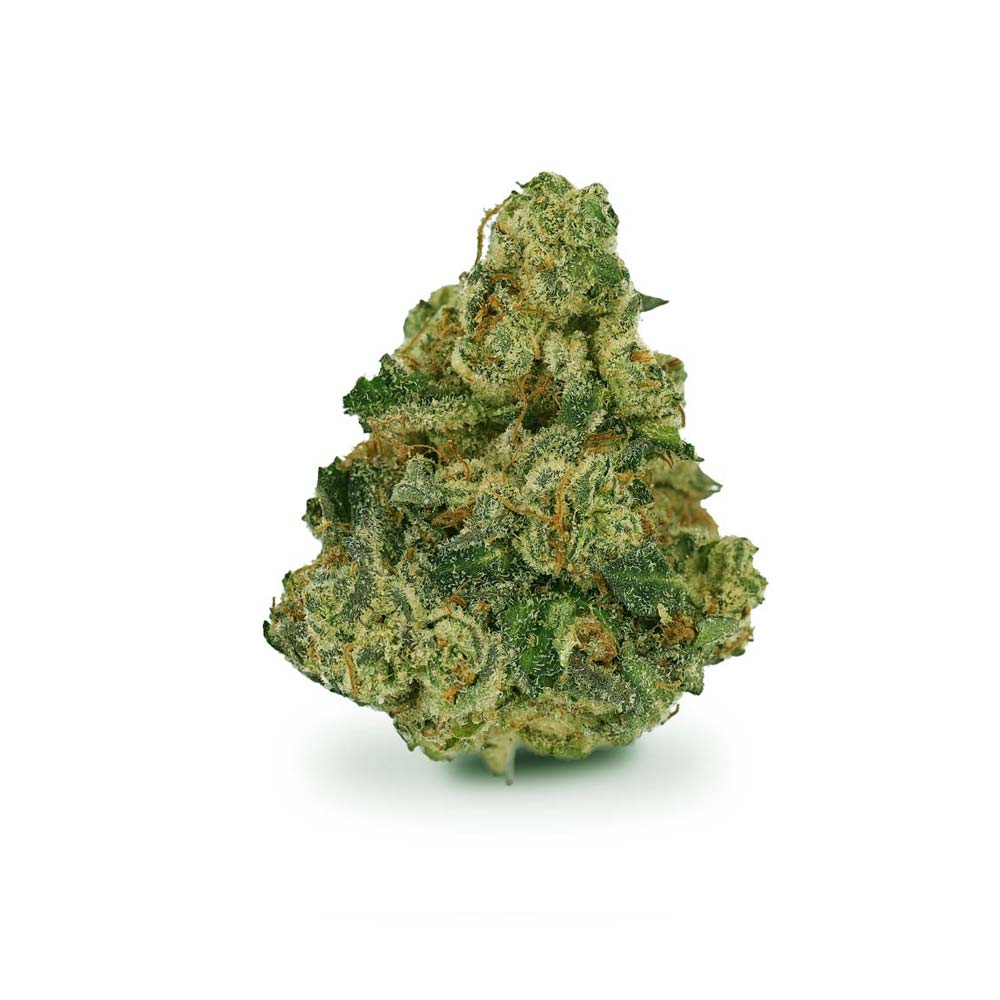 The cannabis plant consists of roots, stem, branches, leaves and – in female plants – flowers. Each of these components has its own function. Particularly important: the trichomes on the flowers produce the resin with cannabinoids and terpenes. The entire plant works towards supplying the flowers and producing as many active ingredients as possible.
- Roots: water & nutrient uptake
- Trunk: transportation & stability
- Leaves: energy production (photosynthesis)
- Flowers: home of the cannabinoids
Root system: basis for growth
A strong root system enables the cannabis plant to absorb water and nutrients efficiently. Temperature, substrate and aeration determine how vigorously roots grow. Optimal root health is strictly controlled, especially in medical cultivation.
- The basis of plant health
- Nutrient intake is crucial
- Strong root network = strong flowers
Exciting, because there are even cultivation systems that work without soil, look here:
Leaves & photosynthesis
The large fan leaves of the cannabis plant are responsible for photosynthesis. They convert light into energy. The color, shape and elasticity of the leaves indicate the nutrient status and health of the plant. Yellow leaves, spots or bends indicate stress or deficiencies.
- Photosynthesis for energy
- Indicator for health
- Important for flower development
Varieties & genetics? Indica, Sativa, Hybrid
The cannabis plant is roughly divided into four main types: Sativa, Indica, Hybrid and Ruderalis. These categories describe growth, effect and properties – even though modern varieties are almost always hybrids.
Growth phases of the cannabis plant
The cannabis plant goes through several growth phases, each of which entails different requirements and changes. Light, temperature, nutrients and genetics determine how quickly and how strongly the plant grows.
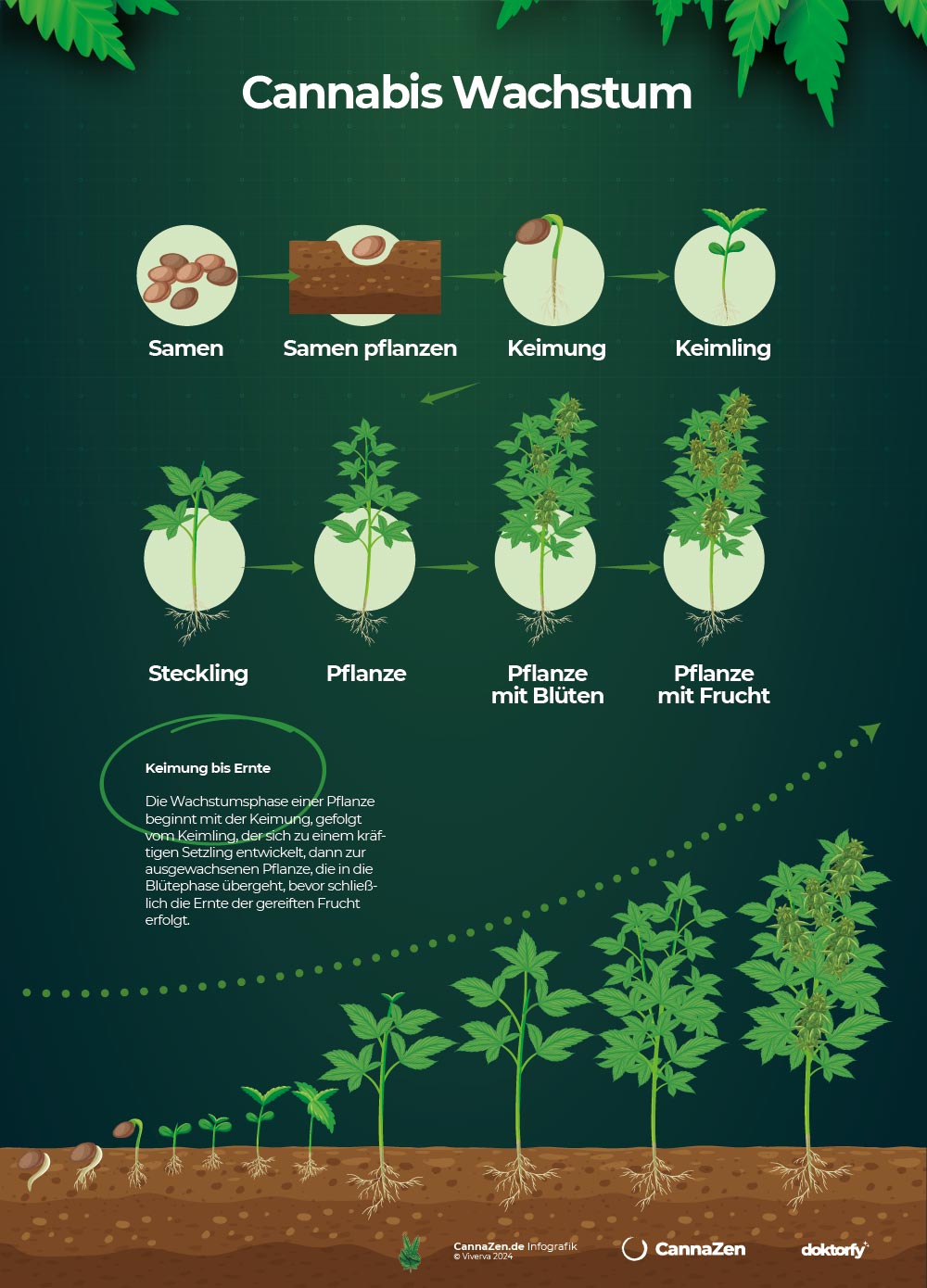
Germination & early development
A small, tender plant develops from the cannabis seed. Moisture is crucial in this phase. Too little water slows growth, too much leads to rot. The young plant first forms strong roots before it grows upwards.
- Sensitive initial phase
- Moisture is crucial
- Root formation has priority
Vegetative phase: growth & strength
During the growth phase, the plant forms leaves, trunk and branches. Plenty of light, sufficient nutrients and good ventilation promote vigorous growth. The more stable the plant is, the more energy it can put into the flowering phase later on.
- Rapid growth
- Light duration is crucial
- Basis for flower formation
Flowering phase: formation of the cannabis flowers
The flowering phase begins when the light hours are reduced. Now the plant forms calyxes, pistils and finally the trichomes. Only female plants produce flowers rich in active substances – male plants develop pollen and are therefore removed during cultivation.
“Only female cannabis plants produce resin-rich flowers – that’s why male plants are consistently weeded out.”
- Light control triggers flowering
- Trichomes produce resin
- Female plants are decisive
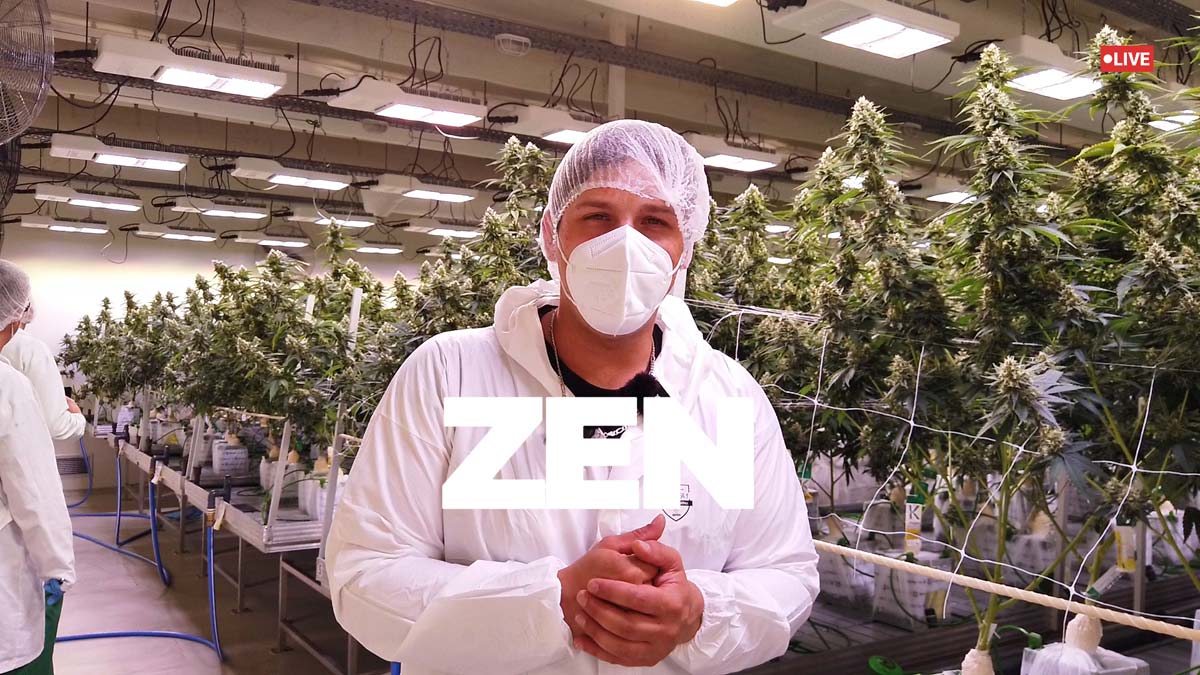
Cultivation XXL: Stream our cannabis plantation documentary here!
Cannabinoids of the cannabis flower
The cannabis plant produces over 100 different cannabinoids. They act via the endocannabinoid system and influence pain perception, sleep, mood, appetite or muscle tension. The composition of these cannabinoids differs greatly between medicinal varieties.
- THC: psychoactive effect
- CBD: balancing effects
- Other cannabinoids enhance the effect
THC formation
THC is initially produced as THCA and is activated by drying or heating. Depending on the genetics, THC can have a calming, activating or pain-relieving effect. The quantity strongly depends on the trichome density.
CBD education
CBD is produced as CBDA and has a non-intoxicating effect. It is often used medicinally, for example for inflammation, anxiety or sleep disorders. CBD can modulate the effects of THC.
Terpenes? Aroma & effect
Terpenes determine the scent and taste of the plant. At the same time, they influence the effect – such as calming, activating or focusing. Each cannabis plant has its own terpene profile.
- Aroma & taste
- Effect is also shaped
- Varieties differ significantly
Medicinal cannabis plants
In the medical sector, cannabis plants are grown under GMP conditions: sterile rooms, controlled light, precisely measured nutrients and strict tests ensure stable levels of active ingredients. Doctors select varieties individually based on symptoms, terpene profile and dosage.
- Pharmaceutical quality
- Standardized active ingredient content
- Distribution via cannabis pharmacies
Order cannabis online in 3 minutes
With a medical prescription, you can now even order cannabis flowers digitally. Advice, prescription and delivery take place online – quickly, safely and conveniently.
Here you can order cannabis online – directly via doctor & pharmacy.