Cannabis and sport: what’s true? Weed while exercising – studies and real effects
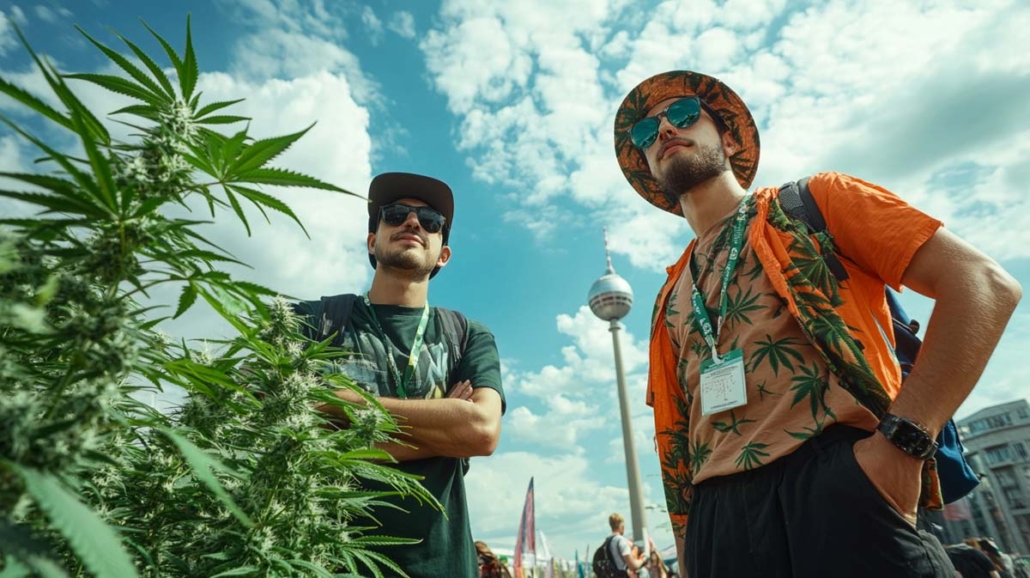
More and more people are combining sport with cannabis in the form of THC and CBD –be it for better sleep, more relaxation or a more enjoyable training session. At the same time, there are many unanswered questions: does it really help or is it just a trend? And what does science say? Current research shows that cannabis does not increase performance, but may have some benefits for recovery, mood and regeneration. Here’s our overview of myths, real findings and what it all means for your own training. Also, now live, the first strain from Frederic Vosgröne (MMA legend).
Cannabis before training is often associated with better focus, more flow or a more relaxed mood. Scientifically, however, a clear picture emerges: THC is hardly suitable before intensive or technically demanding units, as reaction time, coordination and attention can decrease measurably.
“Studies have not been able to prove that THC increases performance; in fact, it can even slow down strength training or intervals.”
CBD, on the other hand, does not have an intoxicating effect and hardly affects motor skills or concentration. Research results indicate that CBD can reduce stress and nervousness before training, making exercise feel subjectively more pleasant – without increasing actual performance.
How does cannabis work before exercise?
THC: Coordination ↓
CBD: Stress ↓
Performance: unchanged
Doing cannabis after sport?
After training, the benefits of cannabis shift significantly towards regeneration.
“CBD in particular shows relevant effects here.”
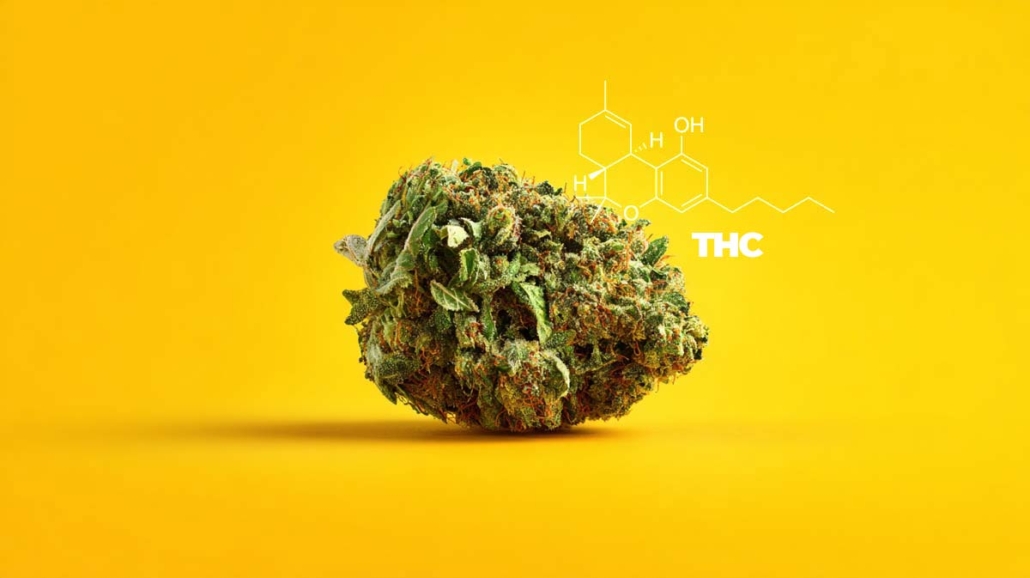
Cannabinoide in Cannabis: CBD
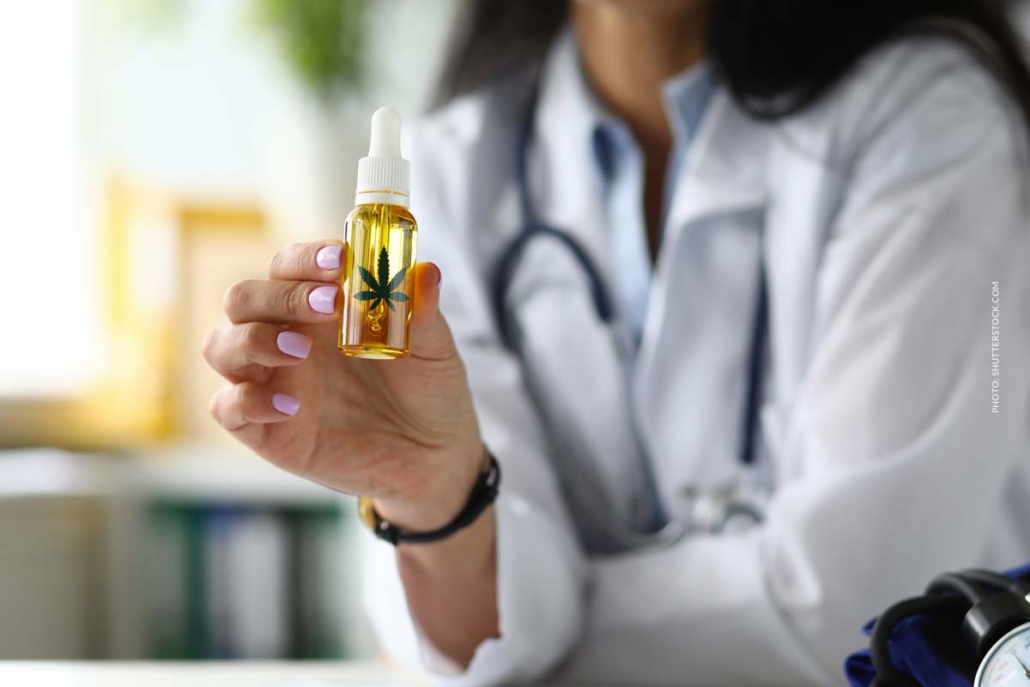
Studies indicate that CBD can alleviate inflammatory processes after stress and reduce the subjective sensation of pain. In addition, sleep plays a central role in muscle regeneration, hormone balance and recovery – this is precisely where CBD can help by making it easier to fall asleep and improving the quality of sleep.
THC is often used after sport because of its relaxing effect, but can influence deep sleep phases depending on the dose. The following therefore applies: CBD is better suited for regular regeneration, THC is more reserved and situational.
Sports scientist Simon warns against regular cannabis use after training.
His main argument: even if cannabis can have a relaxing effect in the short term, experience from his environment shows that motivation, discipline and mental clarity can suffer in the long term. He is particularly critical of the lasting influence on reaction time, mental stability and habit formation. He also refers to studies (you can find a lot below) that investigate possible connections between cannabinoids and hormonal effects such as testosterone changes – even if the data situation here is not clear.
His conclusion? Short-term relaxation is conceivable, but in his view the risks outweigh the benefits in the long term, especially with regular consumption and among young people.
Regular: critical
Psyche: Risk
Motivation: ↓
NEWS +++ Bäm! Now live, the first variety by Frederic Vosgröne
Sport and cannabis? Now that’s news! From gym to grow: Frederic Vosgröne, aka the Neanderthal, takes the next big step and, together with Demecan, presents several varieties that are causing a stir. Power, precision and quality – all combined in new, high-class flowers for the German market.
Frederic Vosgröne: Cannabis flowers
Cannabis and competitive sport?
MYTHS about weed and sport
einfach erklärt
There are many myths surrounding cannabis, CBD and sport. Some say that cannabis improves performance or promotes muscle building, others claim that it is detrimental to any kind of training. The truth lies in the middle. There are positive effects – but no quick miracle cures. That’s why it’s worth separating the myths from the real findings.
Myth #1 Cannabis improves performance?
This myth persists, but it is not true. THC can actually slow down performance, especially during intense sessions. CBD, on the other hand, shows small benefits, but not enough to claim real performance enhancement.
“The body remains the most important factor – not the substance.”
That’s right!
Myth #2 Cannabis makes training dangerous?
THC can reduce alertness and coordination, especially in high doses. CBD, on the other hand, has no intoxicating effect and does not interfere with training. Many people even report greater calm and less stress during exercise.
That’s not true.
Myth #3 Cannabis harms your recovery?
Several studies (such as Isenmann) show that CBD helps the body relax and can reduce inflammation. This can even make recovery easier – important for anyone who exercises regularly.
Not true!
Weed and weight training: how weed affects muscle building
With a little more time, watch the video:
Findings from current studies
Research is increasingly focusing on cannabis and sport. Although much is still in its infancy, current studies show interesting benefits for sleep, mood, motivation and recovery. Here you will find the most important findings explained simply.
Sleep better with CBD
CBD can help you fall asleep faster and sleep more peacefully. This is important because the body repairs muscles and stores energy during sleep. Many people also report that they feel less exhausted the next day.
CBD can reduce pain after hard training sessions and relieve inflammation. As a result, the body feels recovered more quickly and it is easier to get back into training. This is a particular advantage for athletes with high workloads.
In some tests, CBD showed small improvements in breathing and average strength output. This does not mean that you suddenly become stronger – but the body works a little more efficiently. These effects are small, but measurable.
Study participants who used cannabis or CBD often had more fun and felt more motivated when exercising. This can be particularly helpful during endurance training or relaxed sessions. A good mood often leads to longer, more enjoyable training sessions.
After intensive training sessions, athletes using CBD (for example as a gel) showed lower levels of a marker that indicates muscle damage. This shows that CBD calms the body more quickly and supports recovery. This allows you to train more regularly without feeling overloaded.
Cannabis does not automatically make you faster, stronger or fitter.
THC can even reduce performance, especially before intense sessions. CBD, on the other hand, can be useful if you want to sleep better, reduce pain or improve your recovery. For your training, this means: don’t use cannabis or CBD as a performance booster, but as a support for regeneration, sleep and motivation. The greatest effects occur when you combine training, nutrition, recovery and mental strength – CBD can be a small additional tool here, but not the main factor.
Bonus Video Tips! “High” Performers
You are not alone as an athlete. Usain Bolt, Mike Tyson, Muhammad Ali, Conor Mc Gregor, John Jones, Nate/Nick Diaz and Michael Felps have all used cannabis.
https://cannazen.co.uk/wp-content/uploads/2025/11/sport-cannabis-interview-thc-cbd-studien-aktuell-vor-nach-training.jpg8001200Teamhttps://de.cannazen.one/wp-content/uploads/2026/01/cannazen-shop-lieferung-cannabis-weed-hanf-online-rezept-arzt-apotheke.svgTeam2025-12-13 14:56:542025-12-13 14:56:54Cannabis and sport: what’s true? Weed while exercising – studies and real effects
We may request cookies to be set on your device. We use cookies to let us know when you visit our websites, how you interact with us, to enrich your user experience, and to customize your relationship with our website.
Click on the different category headings to find out more. You can also change some of your preferences. Note that blocking some types of cookies may impact your experience on our websites and the services we are able to offer.
Essential Website Cookies
These cookies are strictly necessary to provide you with services available through our website and to use some of its features.
Because these cookies are strictly necessary to deliver the website, refusing them will have impact how our site functions. You always can block or delete cookies by changing your browser settings and force blocking all cookies on this website. But this will always prompt you to accept/refuse cookies when revisiting our site.
We fully respect if you want to refuse cookies but to avoid asking you again and again kindly allow us to store a cookie for that. You are free to opt out any time or opt in for other cookies to get a better experience. If you refuse cookies we will remove all set cookies in our domain.
We provide you with a list of stored cookies on your computer in our domain so you can check what we stored. Due to security reasons we are not able to show or modify cookies from other domains. You can check these in your browser security settings.
Google Analytics Cookies
These cookies collect information that is used either in aggregate form to help us understand how our website is being used or how effective our marketing campaigns are, or to help us customize our website and application for you in order to enhance your experience.
If you do not want that we track your visit to our site you can disable tracking in your browser here:
Other external services
We also use different external services like Google Webfonts, Google Maps, and external Video providers. Since these providers may collect personal data like your IP address we allow you to block them here. Please be aware that this might heavily reduce the functionality and appearance of our site. Changes will take effect once you reload the page.
Google Webfont Settings:
Google Map Settings:
Google reCaptcha Settings:
Vimeo and Youtube video embeds:
Other cookies
The following cookies are also needed - You can choose if you want to allow them:
Privacy Policy
You can read about our cookies and privacy settings in detail on our Privacy Policy Page.