THCV is a lesser-known cannabinoid of the cannabis plant that differs significantly from THC and CBD. It has interesting effects on the body and is the focus of current research. But what exactly is THCV, how does it work and what role does it play in cannabis flowers? Here you will find all the important information on the effects, special features and medical use of THCV. Back to all: Cannabinoids in cannabis (active ingredients).
THCV: What exactly is it?
Cannabinoide in Cannabis: THCv
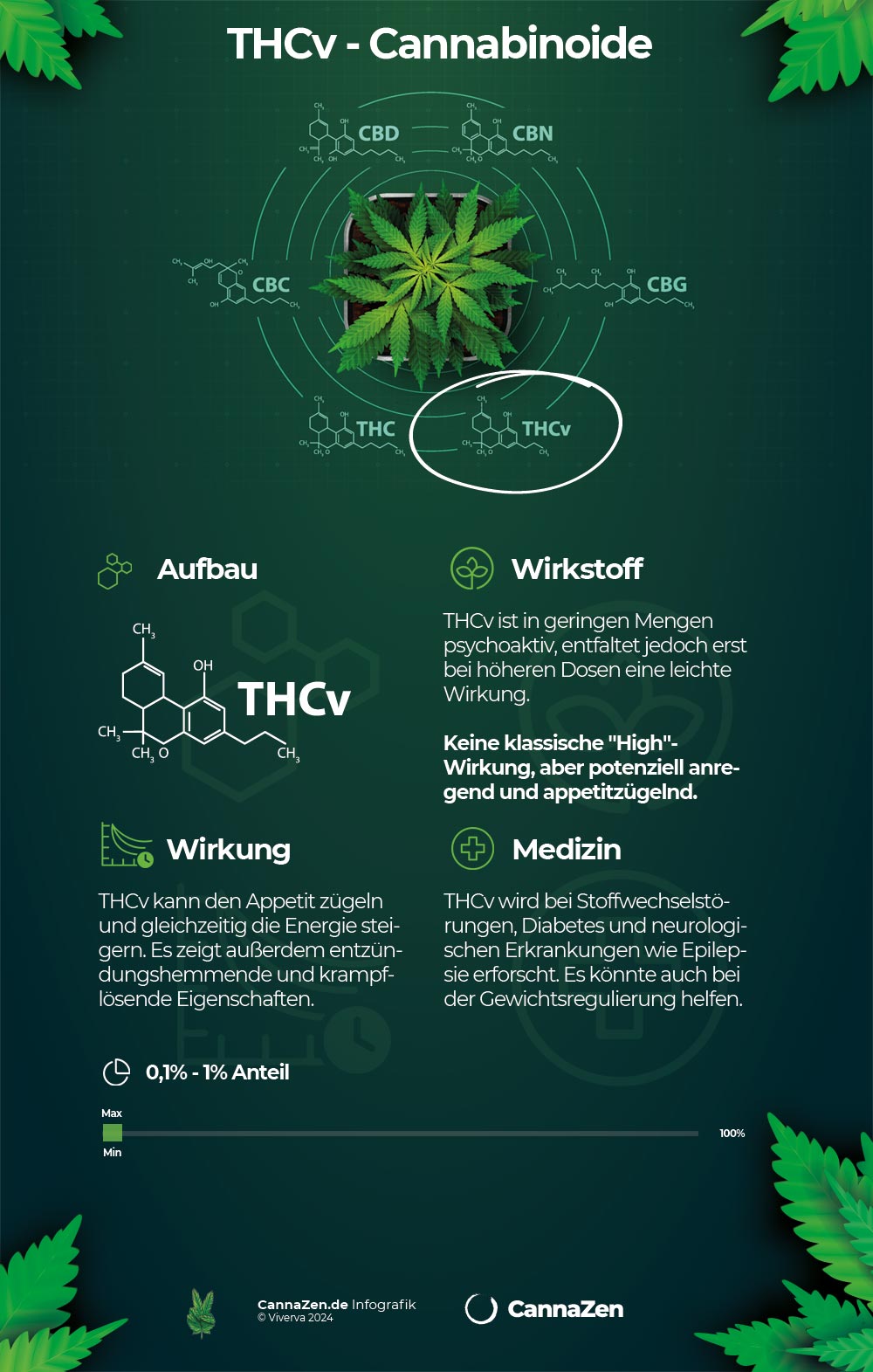
THCV stands for tetrahydrocannabivarin and is a rarer cannabinoid that is mainly found in African landraces such as Durban Poison or Malawi Gold. Unlike THC, it is hardly psychoactive at low doses. In higher doses, however, it can cause mild, clearer intoxicating effects. The potential role of THCV in medicine is particularly interesting: it could regulate metabolism, inhibit appetite and alleviate inflammation.
- THCV stands for tetrahydrocannabivarin
- Does not have a psychoactive effect in small quantities
- Could affect metabolism and appetite
THCV content: Why is it so low?
THCV is only present in very small quantities in most cannabis flowers – usually between 0.1% and 1%. Particularly high THCV levels are found in special strains that have been developed specifically for medical research. In the future, THCV-rich varieties could play a greater role, for example in the treatment of metabolic diseases or obesity.
Did you know? THCV is considered the “diet cannabinoid” because studies have shown that it can reduce the feeling of hunger.
How THCV works in the body

Wirkung von Cannabis, Beispiel Energie und Fokus
THCV has a unique effect on the endocannabinoid system. At low doses, it blocks the CB1 receptors that are normally activated by THC. As a result, THCV can even dampen the classic “high” effect. At higher doses, however, it activates CB1 itself and produces a mild psychoactive effect. THCV also binds to CB2 receptors, which are relevant for inflammation and the immune system.
- Blocks CB1 receptors at low doses
- May have a psychoactive effect – depending on the quantity
- Could relieve inflammation and pain
THCV and the metabolism
A special feature of THCV is its possible influence on the metabolism. Studies have shown that THCV could stabilize blood sugar levels and reduce cravings. THCV is therefore also being intensively investigated in research into type 2 diabetes and obesity. The results are promising, but still require further clinical confirmation.
Studies on THCV
Cannabinoide in Cannabis: THCv
THCV compared to THC, CBD and CBC
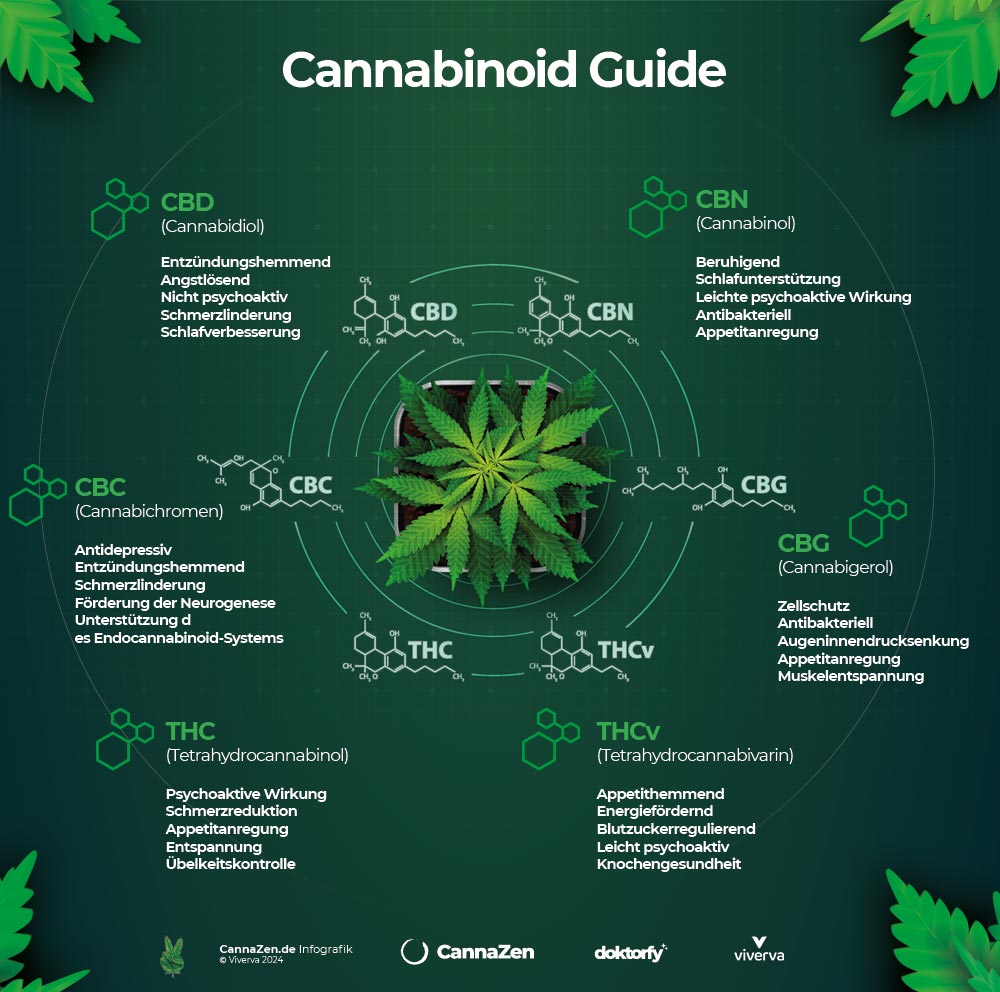
Cannabinoid Übersicht
Cannabinoids such as THC, CBD, CBC and THCV each have different effects. While THC is primarily known for its psychoactive effects and CBD has a relaxing effect, THCV offers an interesting combination: it can be stimulating, energizing and at the same time dampen the appetite. This makes it very different from THC, which has more of an appetite-stimulating effect.
While THC often makes you “tired and hungry”, users of THCV report more focus, energy and less hunger.
Remember THCV and other cannabinoids:
- THCV is not intoxicating in low doses
- Can influence appetite and metabolism
- Offers new approaches for medical therapies
THCV and the entourage effect
THCV often only unfolds its full potential in combination with other cannabinoids. Due to the “entourage effect“, THCV enhances certain effects, such as focus or pain reduction, when taken together with CBD or THC. In medical applications, flowers and extracts are therefore specifically selected so that they contain balanced THCV levels.
This makes THCV one of the most exciting cannabinoids for future cannabis research and medical therapy.
Cannabis effects: cannabinoids, terpenes and genetics
Cannabinoids, terpenes and genetics: Learn everything you need to know about medicinal cannabis on CannaZen.
- How does cannabis work?
- Cannabinoids (effect)
- Main active ingredients: THC(Δ9-THC) and CBD
- Terpenes (aroma and effect)
- Genetics (Sativa, Indica and hybrids)