Myrcene is one of the most important terpenes in the cannabis plant and is known for its relaxing, earthy effect – especially in indica strains. It interacts with cannabinoids such as THC in the entourage effect and is closely related to other terpenes such as linalool, humulene or beta-caryophyllene. This article shows what myrcene is, how it smells and works – and where it could be used therapeutically. Back to terpenes in cannabis.
Myrcene: What is that?

einfach erklärt
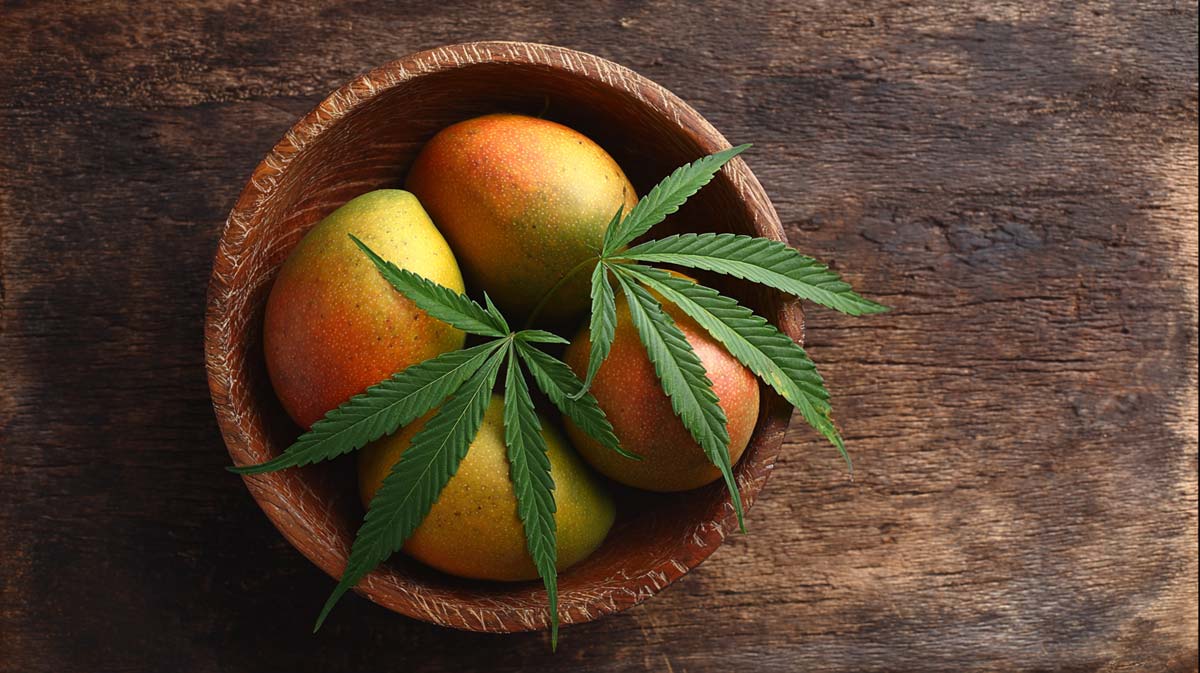
Myrcene (also: β-myrcene) is one of the most common terpenes in the cannabis plant. It is not only found in cannabis, but also in mangoes, thyme, lemongrass and hops. In many indica-dominant strains, myrcene is the dominant terpene and is known for its relaxing and physically sedative effects. It is a monoterpene with high volatility and is released via the trichomes of the flower.
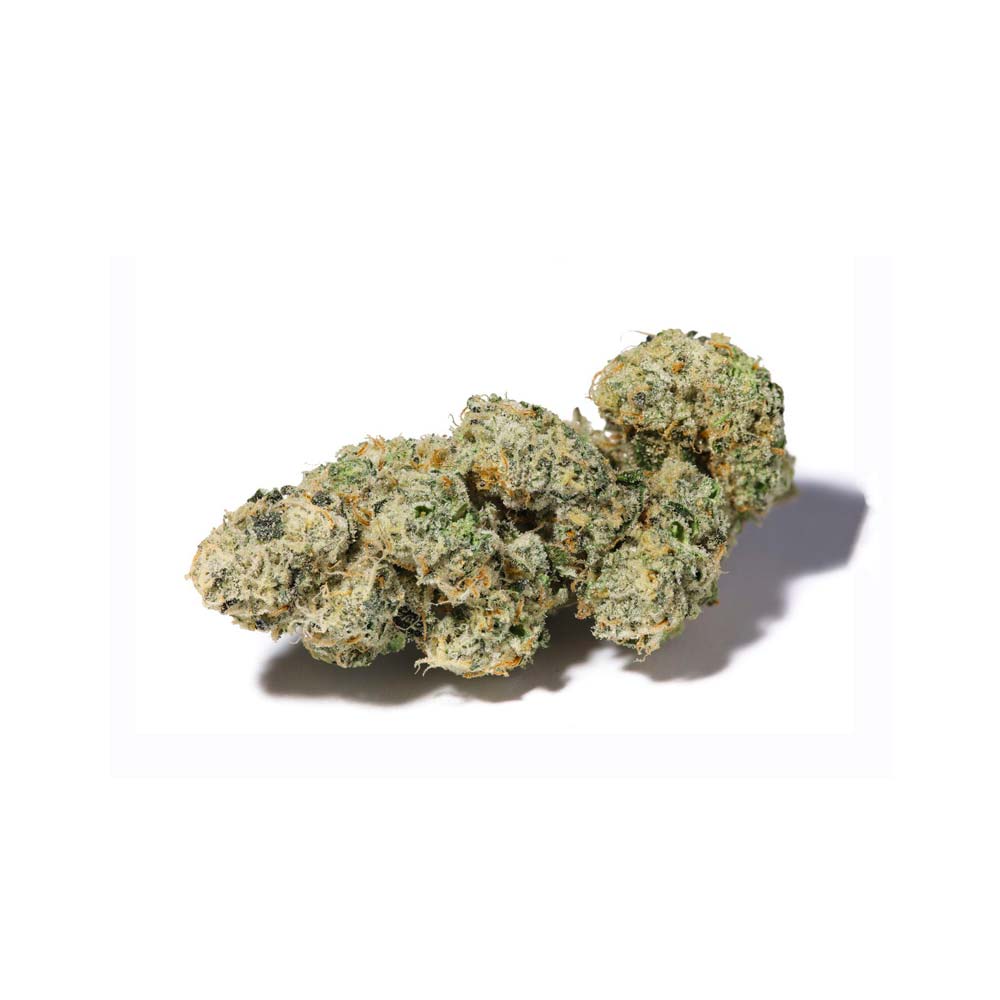
Typical strains with a lot of myrcene are Blue Dream, OG Kush, Granddaddy Purple or Mango Kush.
- Most common terpene in cannabis
- Also contained in mangoes and hops
- Strongly aromatic and medically relevant
Myrcene in cannabis profiles
Especially in “classic” indica varieties, myrcene is formative for the terpene profile. It not only influences the smell, but also the subjectively perceived effect – for example by enhancing the “couch-lock” effect in THC-rich varieties.
Smell and aroma of myrcene
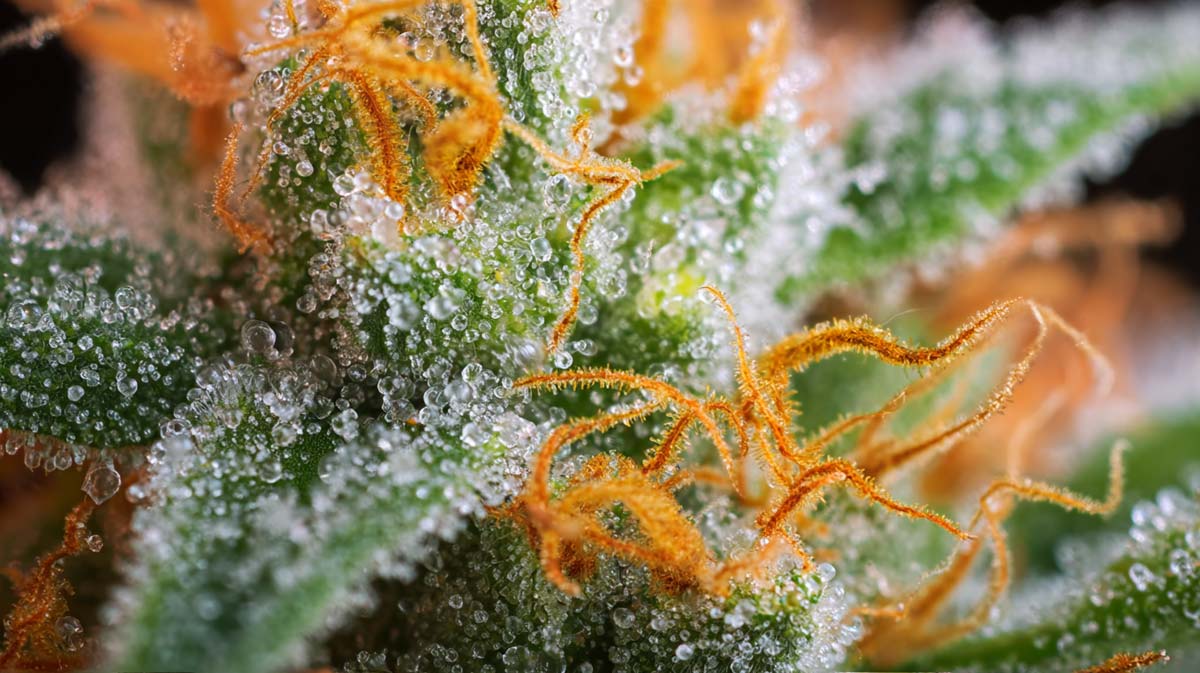
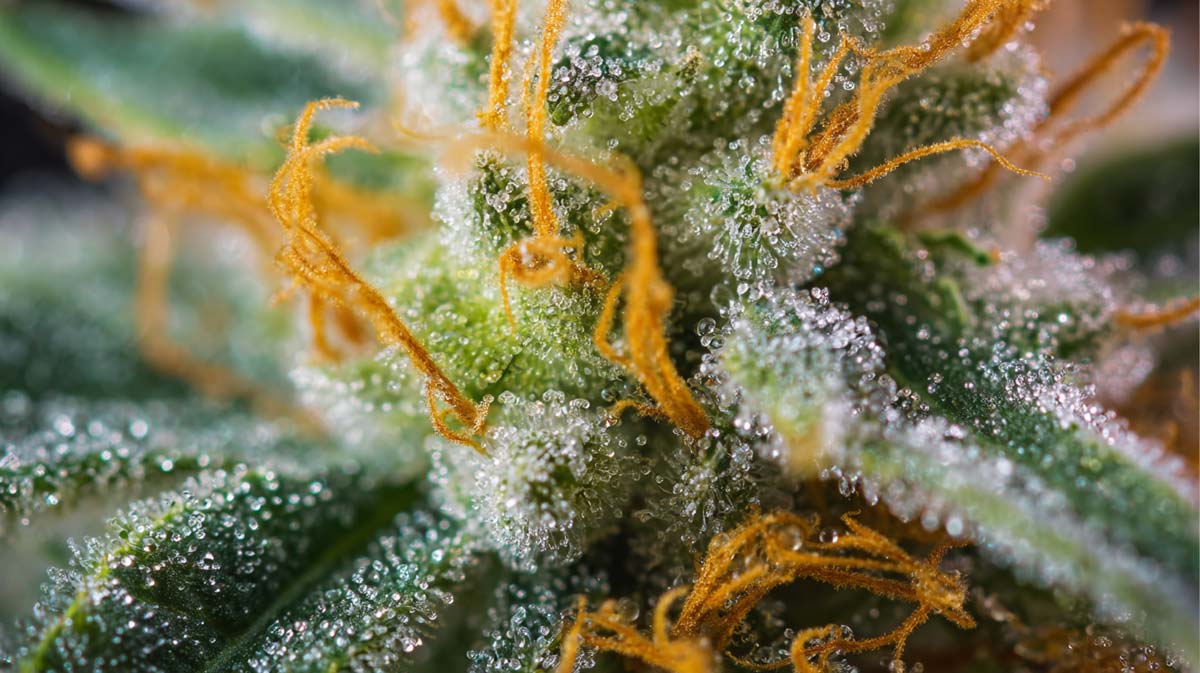
Nahaufnahme, Cannabisblüte und Terpene
Myrcene is known for its earthy, slightly fruity and musky aroma. It is often reminiscent of overripe fruit or damp earth – a typical scent that many consumers associate with “strong weed”. The aroma is deep, heavy and dominates many indica-dominant cannabis flowers.
- Aroma: earthy, spicy, musky
- Associations: damp wood, grape, fermented fruit
- Most common terpene in strong indica strains
Sensory significance
Myrcene strongly influences the flavor profile – often with a slightly bitter aftertaste. The presence on the nose is deep and long-lasting, making it a leading terpene for many “classic” cannabis strains.
Effect of myrcene
Myrcene has sedative, muscle-relaxing and pain-relieving effects. It is associated with sedative effects and can increase the permeability of the blood-brain barrier – which could enhance the effects of other cannabinoids such as THC. It also has antioxidant and anti-inflammatory properties.
- Relaxing, sleep-promoting, calming
- Pain-relieving (analgesic)
- Possible amplification of THC effect
- Anti-inflammatory (anti-inflammatory)
Medical relevance
Myrcene is discussed in particular for sleep disorders, muscle tension, chronic pain and anxiety. It could be part of the entourage effect, in which terpenes and cannabinoids work together synergistically.
Similar terpenes
These terpenes share similar effects or aroma profiles with myrcene:
- Linalool: calming, relaxing, floral lavender aroma
- Humulene: earthy-hoppy, anti-inflammatory, appetite suppressant
- Beta-caryophyllene: spicy-peppery, interacts with the CB2 receptor
Terpenes?! Where are they actually?
Terpenes can be found on the flower of the cannabis plant. There are (illustrated here for you):
- Pestles – small threads
- Trichomes – small balls
- Terpenes – are inside the small spheres
In fact, the myth of the difference between sativa, indica and hybrid is true. The real effect comes from the terpenes in combination with the cannabinoids (THC, CBD, etc.)
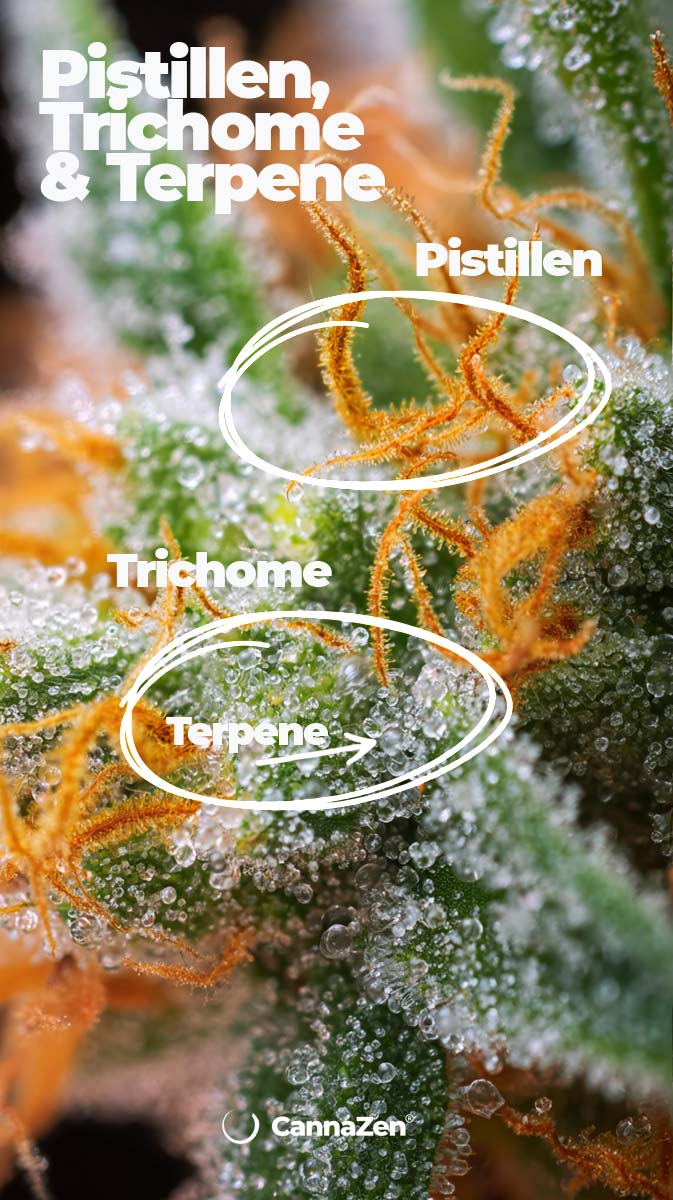
Infografik: Pistillen, Trichome und Terpene
Terpenes in cannabis
A total of over 150 different terpenes have been identified in the cannabis plant. Of these, around 20-30 terpenes occur regularly in relevant quantities and have potential medicinal effects. Find out more about indications (diseases), taste, aroma and effect! What can which terpene do?
Nahaufnahme, Cannabisblüte und Terpene