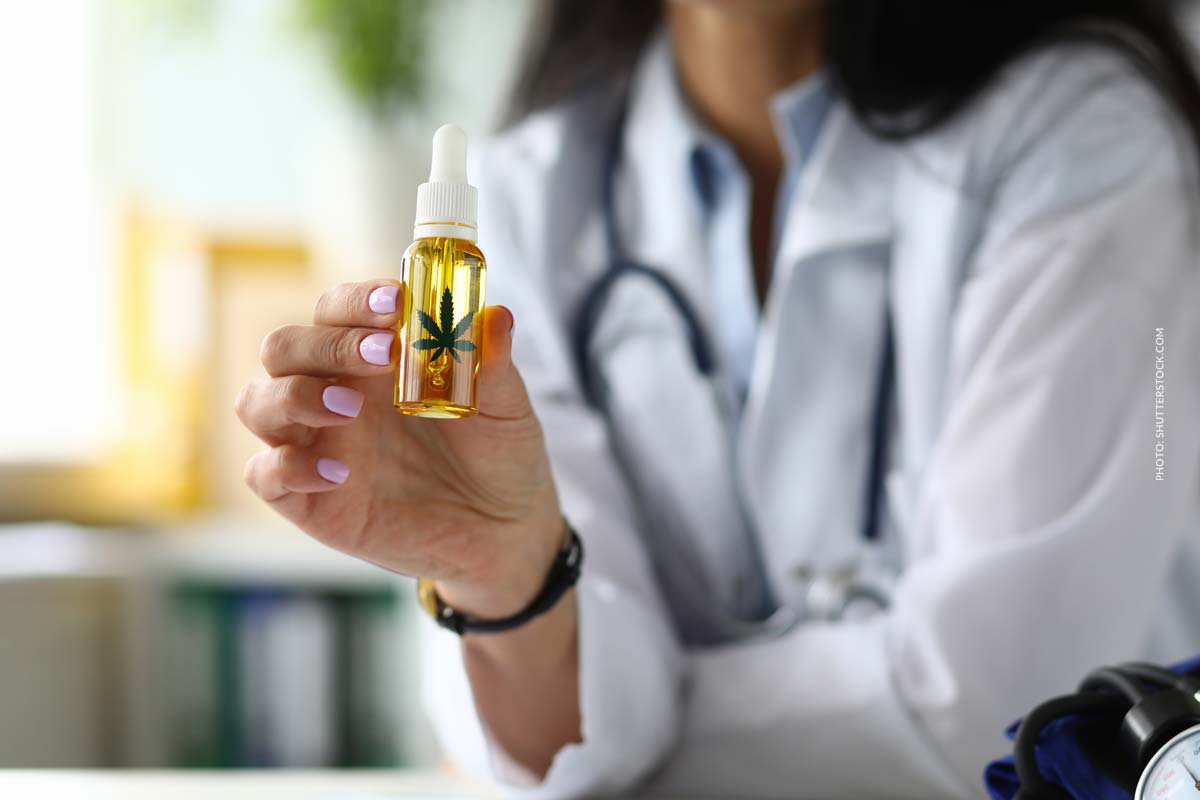
A prescription for medicinal cannabis is only issued after an individual medical examination. Doctors will assess your diagnosis, previous treatment attempts, tolerance, pain level, sleep quality and other factors to determine whether cannabis therapy is justified and medically appropriate.
“Fortunately, it’s all digital and online. Telemedicine should simplify access to medical care.”
That’s why testing is possible on site or digitally via a teleclinic – without waiting rooms and without long appointments.
Active ingredients in medicinal cannabis: cannabinoids
Cannabinoids are active substances that are produced in the trichomes of the cannabis flower. They interact with CB1 and CB2 receptors of the endocannabinoid system. The best-known cannabinoids are THC and CBD, but there are also over 100 others such as CBG, CBC and CBN. Active ingredients such as CBD are even used in sports, for example for muscle regeneration.
The interaction of all cannabinoids determines the effect, efficacy, tolerability and therapeutic range.
THC: effective for pain, spasticity, loss of appetite, sleep problems.
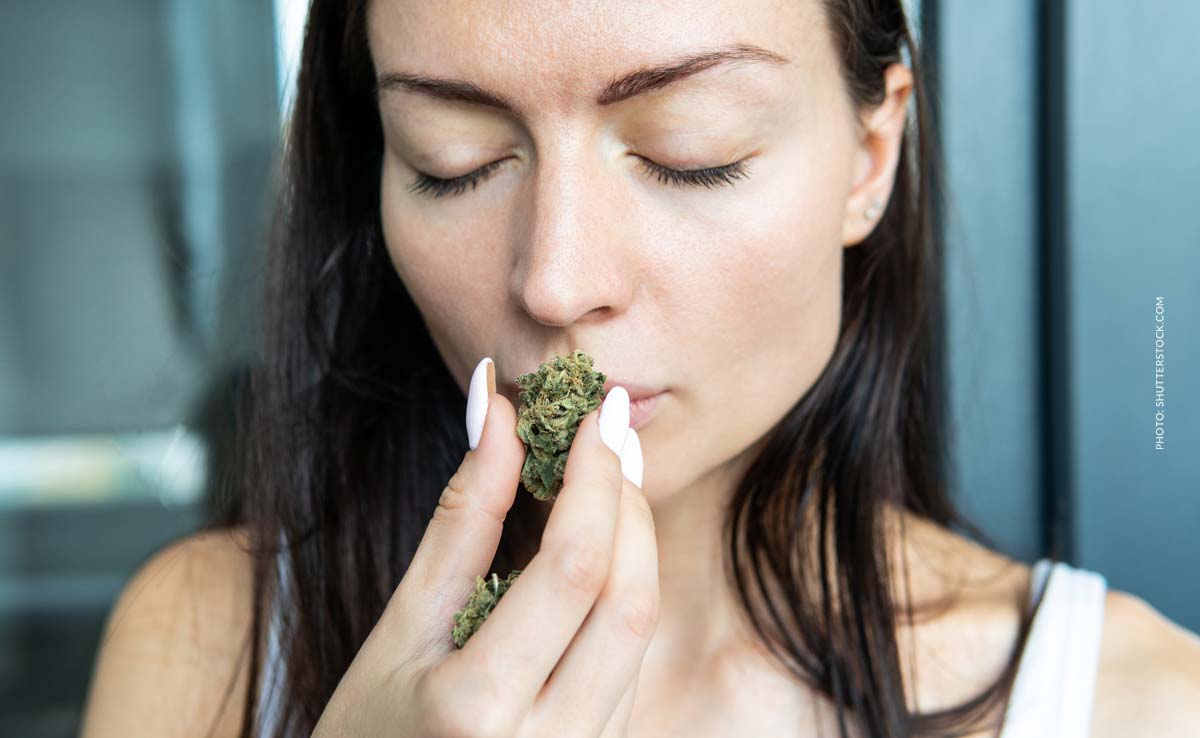
Flowers contain the full cannabinoid and terpene profile. They are usually vaporized, as the onset of effect is fast and the dosage is flexible. Differences arise due to genetics, THC/CBD content and terpene profile (e.g. myrcene, limonene, linalool). Learn more about cannabis flowers here.
Fast onset of action (inhalation)
Flexible dosing
Large selection of varieties depending on the effect profile
Extracts are highly standardized and are suitable for uniform, predictable courses of action. They contain defined THC/CBD ratios and are taken orally. Find out more about cannabis extracts here.
Constant amount of active ingredient
Easy to dose
Ideal for chronic complaints
Finished medicinal products such as capsules, sprays & co.
Medicinal cannabis is available in various forms. However, dronabinol, capsules or sprays are used less frequently, but supplement the therapeutic spectrum.
Aroma, taste and effects: Terpene profiles
Terpenes are aromatic plant substances that not only determine the smell and taste of cannabis, but also actively influence its effect. Just like cannabinoids, they are produced in the trichomes of the flowers and work together with THC and CBD in what is known as the entourage effect. Terpene profiles therefore play an important role in the selection of varieties and therapeutic fine-tuning of medicinal cannabis.
“Terpenes modulate the effect of THC and CBD and shape the character of a strain.”
Why terpenes are medically relevant
Therapy is not just about the pure THC or CBD content. Two strains with identical THC levels can feel significantly different – this is where terpenes come into play. Terpenes can calm, activate, balance or focus and influence how intensely or pleasantly THC is perceived.
What are the most common terpenes in medicinal cannabis?
Myrcene: earthy, spicy; rather calming, physically relaxing
Doctors often consider terpene profiles with regard to the course of the day. They are produced here, in the small trichomes of the flower. Varieties with activating terpenes are more suitable during the day, while calming profiles are often used in the evening or for sleep problems.
“The terpene profile helps to adapt cannabis specifically to everyday life, symptoms and daily rhythms.”
Flowers vs. extracts in the terpene profile
Cannabis flowers usually contain the more complete natural terpene profile. In extracts, the profile is more standardized or specifically adapted. Extracts also have no more aroma than flowers. Which form is more suitable depends on the therapeutic goal, the desired consistency and individual tolerance.
The terpene profile plays a key role in determining whether a strain has a calming, activating or balancing effect – and is therefore a central component of modern medical cannabis therapy.
Genetics: Sativa, Indica and Hybrid
Cannabis strains are roughly divided into three genetics: Sativa, Indica and Hybrid. These terms originally describe the botanical origin of the plants, but today they are mainly used to roughly classify the expected effect profile.
It is important to note that the indica/sativa myth has persisted for ages:
“The cannabis effect is not determined by genetics, but by THC content, CBD content, i.e. the cannabinoids and terpene profile.”
Sativa and Indica varieties
The name comes from Cannabis sativa, a plant form from regions close to the equator such as South America, Africa and Southeast Asia. Sativa genetics are often associated with more activating, mentally clear effects and are used during the day.
Cannabis indica originally refers to plants from mountainous regions of Central Asia, particularly Afghanistan, Pakistan and India. Indica genetics are considered to be more physically relaxing and are often used in the evening or when rest is required.
Hybrid: cross between Indica & Sativa
Hybrids are crosses of sativa and indica genetics. They can be indica-dominant or sativa-dominant. The name therefore describes the predominance of the respective genetic origin and helps to better classify the effect.
When is medicinal cannabis prescribed?
When is medicinal cannabis prescribed? In fact, more and more studies are showing positive effects, even in anti-ageing. Traditionally, doctors use medicinal cannabis primarily for the following complaints:
The choice of strain (THC-dominant, CBD-dominant or balanced) depends on the desired effect: calming, activating or balancing.
How do you obtain medicinal cannabis?
With a valid prescription, you can get cannabis flowers and extracts at any cannabis pharmacy – directly on site or as discreet delivery via mail-order pharmacies. Many partner pharmacies ship free of charge from €100.
“The ultimate benefit for patients: Medicinal cannabis from the pharmacy is GMP-approved, residue-tested and standardized.”
Pharmacy or mail order?
On-site pharmacy: immediate collection, personal advice.
Shipping: discreet, fast, free shipping from 100 €.
Your safe supply of CannaZen
CannaZen combines digital medical care with professional pharmacy dispensing. Independent doctors check your request and a specialized partner pharmacy supplies you with tested medicinal flowers and extracts.
For which illnesses can cannabis be obtained on prescription?
A prescription is possible if other therapies have not helped sufficiently. This is particularly common for chronic pain, neurological disorders, sleep problems, loss of appetite and certain psychological symptoms. You can find a list of diseases here.
Is medicinal cannabis intoxicating?
THC-containing strains can have a psychoactive effect. CBD-dominant products have no high. The effect always depends on the dosage, strain and individual sensitivity. Learn more about CBD in cannabis here.
What is the difference between medicinal cannabis and normal cannabis?
Medical cannabis is laboratory-tested, GMP-certified and has defined THC/CBD levels. Recreational cannabis has no guaranteed purity, no quality standards and no medical tests.
When can you get medical cannabis?
If a doctor determines after an individual examination that cannabis is a suitable medical option and other treatments have not worked sufficiently. More about the process for a cannabis prescription.
Inhalation works within a few minutes. Extracts take considerably longer, as they are absorbed orally. Duration and intensity depend on the cannabinoid profile, form of administration and metabolism.
Can you drive with medicinal cannabis?
Yes, but only with stable long-term medication and full fitness to drive. The THC limit still applies. You should not drive if the effect is uncertain or the dose has changed. More on the question of cannabis and driving.
How much THC is allowed in road traffic?
The current limit in Germany is 3.5 ng THC per ml of blood serum. Even with a prescription, you must be fit to drive at all times.
How does the doctor choose the right variety?
Varieties are selected according to THC/CBD content, terpene profile, effect character (activating, calming, balancing) and individual symptoms.
Which is better – extract or flower?
Flowers act quickly and flexibly. Extracts provide a constant, easily controllable effect. The choice depends on the therapeutic goal, the course of the day and the desired stability.
How does a follow-up prescription work?
If therapy is stable, a follow-up prescription can often be issued more quickly. Doctors check the effect, side effects, dose and possible adjustments before renewing the prescription.
Why do varieties work differently?
The effect depends on the interaction of THC, CBD and terpenes. Strains have different profiles that can have a calming, activating or balancing effect.
How do I find the right dosage?
The dose is gradually increased until the therapeutic effect is achieved. Doctors usually recommend a “start low, go slow” regimen in order to achieve an optimal effect with maximum tolerability.
How do you store medicinal cannabis properly?
Best stored cool, dry and protected from light. Airtight containers prevent loss of aroma and keep cannabinoids stable. Find out more about the correct storage of cannabis and about cannabis and humidity here.
Are there any interactions with other medications?
Yes, especially with depressant or potent medications. Medical clarification is important before cannabis is used together with other medicines. Here more in Cannabis after…
We may request cookies to be set on your device. We use cookies to let us know when you visit our websites, how you interact with us, to enrich your user experience, and to customize your relationship with our website.
Click on the different category headings to find out more. You can also change some of your preferences. Note that blocking some types of cookies may impact your experience on our websites and the services we are able to offer.
Essential Website Cookies
These cookies are strictly necessary to provide you with services available through our website and to use some of its features.
Because these cookies are strictly necessary to deliver the website, refusing them will have impact how our site functions. You always can block or delete cookies by changing your browser settings and force blocking all cookies on this website. But this will always prompt you to accept/refuse cookies when revisiting our site.
We fully respect if you want to refuse cookies but to avoid asking you again and again kindly allow us to store a cookie for that. You are free to opt out any time or opt in for other cookies to get a better experience. If you refuse cookies we will remove all set cookies in our domain.
We provide you with a list of stored cookies on your computer in our domain so you can check what we stored. Due to security reasons we are not able to show or modify cookies from other domains. You can check these in your browser security settings.
Google Analytics Cookies
These cookies collect information that is used either in aggregate form to help us understand how our website is being used or how effective our marketing campaigns are, or to help us customize our website and application for you in order to enhance your experience.
If you do not want that we track your visit to our site you can disable tracking in your browser here:
Other external services
We also use different external services like Google Webfonts, Google Maps, and external Video providers. Since these providers may collect personal data like your IP address we allow you to block them here. Please be aware that this might heavily reduce the functionality and appearance of our site. Changes will take effect once you reload the page.
Google Webfont Settings:
Google Map Settings:
Google reCaptcha Settings:
Vimeo and Youtube video embeds:
Other cookies
The following cookies are also needed - You can choose if you want to allow them:
Privacy Policy
You can read about our cookies and privacy settings in detail on our Privacy Policy Page.