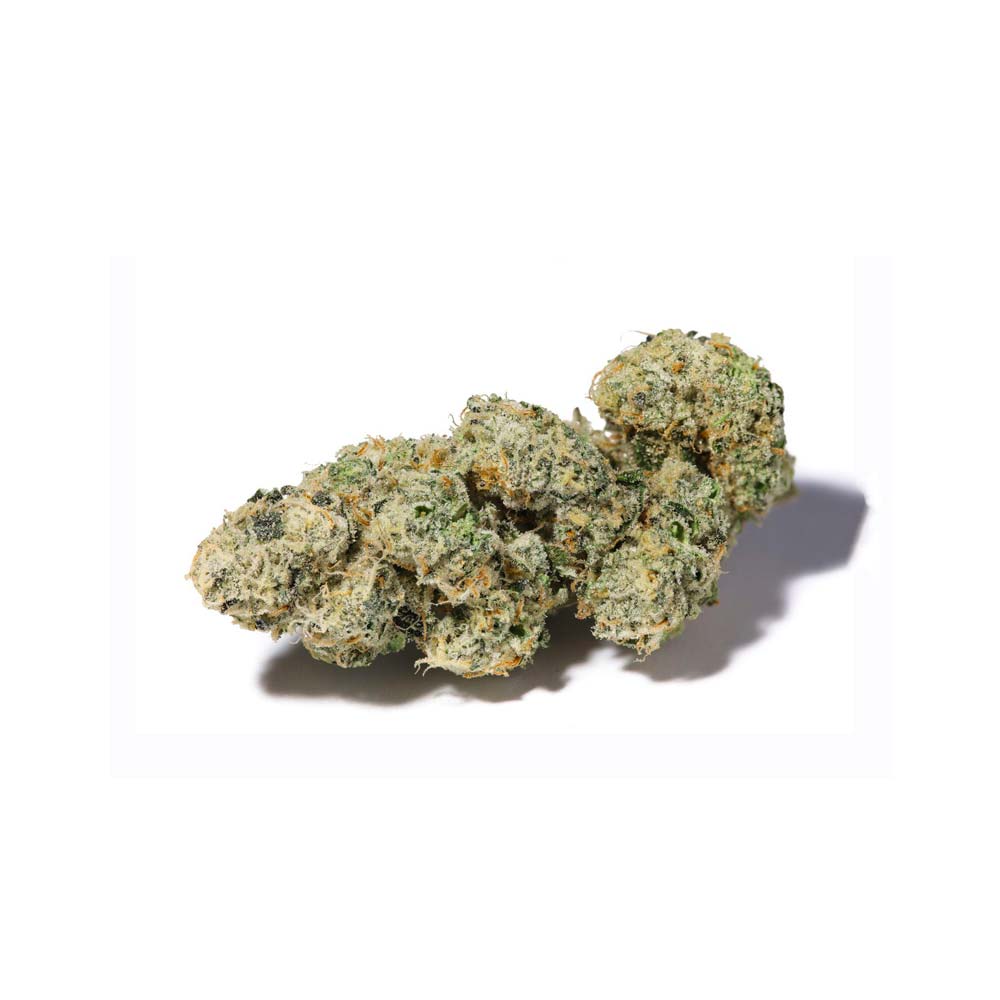
Δ9-THC, also known as delta-9-tetrahydrocannabinol, is the best-known cannabinoid of the cannabis plant and is responsible for the typical psychoactive effects (it is also sold in pure form in pharmacies like dronabinol). It is the main active ingredient that triggers the classic “high”, but also has a variety of medical applications. But what exactly is Δ9-THC, how does it work in the body and what role does it play in cannabis flowers and extracts? Here you will find all the important facts: from its effects to medical applications and dosage. Back to all: Cannabinoids in cannabis (active ingredients).
Δ9-THC is the most common form of THC and the best-known psychoactive component of cannabis flowers. It binds directly to receptors in the brain and influences perception, mood and the sensation of pain. Due to these properties, Δ9-THC is not only used for recreational consumption, but is also used specifically in medicine – for example for chronic pain, nausea and loss of appetite.
3 facts about Δ9-THC:
Δ9-THC stands for delta-9-tetrahydrocannabinol
Main active ingredient of the cannabis plant
Psychoactive effect and medical use
Δ9-THC in medicine: dronabinol
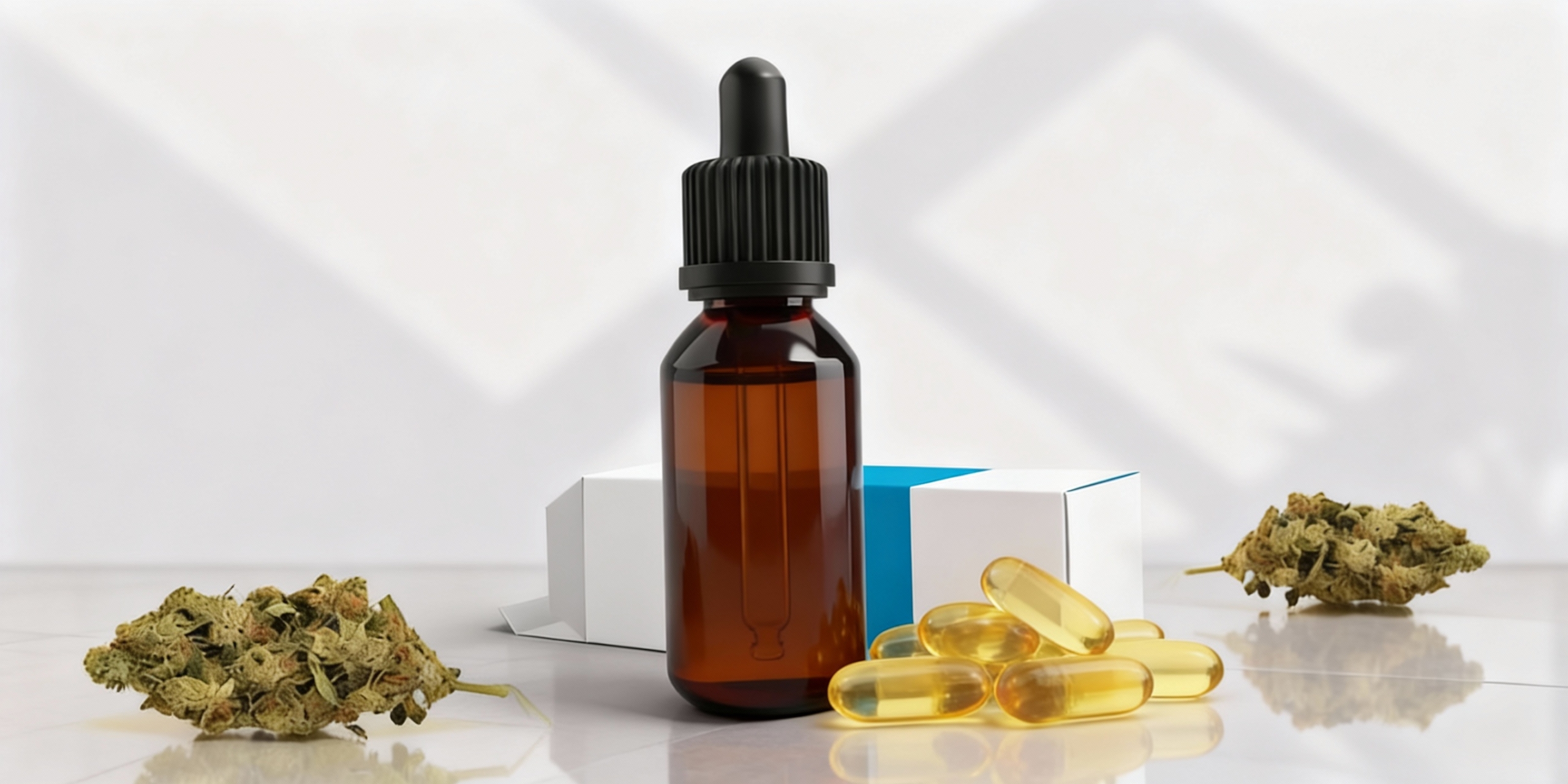
Dronabinol in Form von Tropfen und Kapseln
In medical therapy, Δ9-THC is often used in the form of dronabinol. Dronabinol is pharmaceutically produced, pure Δ9-THC and is chemically identical to THC from the cannabis plant. In contrast to cannabis flowers, it does not contain any other plant substances or terpenes, but only the isolated active ingredient.
Dronabinol is not “artificial THC”, but standardized, pure Δ9-THC in pharmaceutical quality.
Dronabinol is usually produced in pharmacies as drops, capsules or oily solutions. Due to the exact amount of active ingredient, it is particularly suitable for patients for whom a precise dosage and consistent effect are paramount. Compared to cannabis flowers, however, it lacks the entourage effect of other cannabinoids and terpenes.
How Δ9-THC works in the body
Wirkung von Cannabis, Beispiel Entspannung und Wahrnehmung
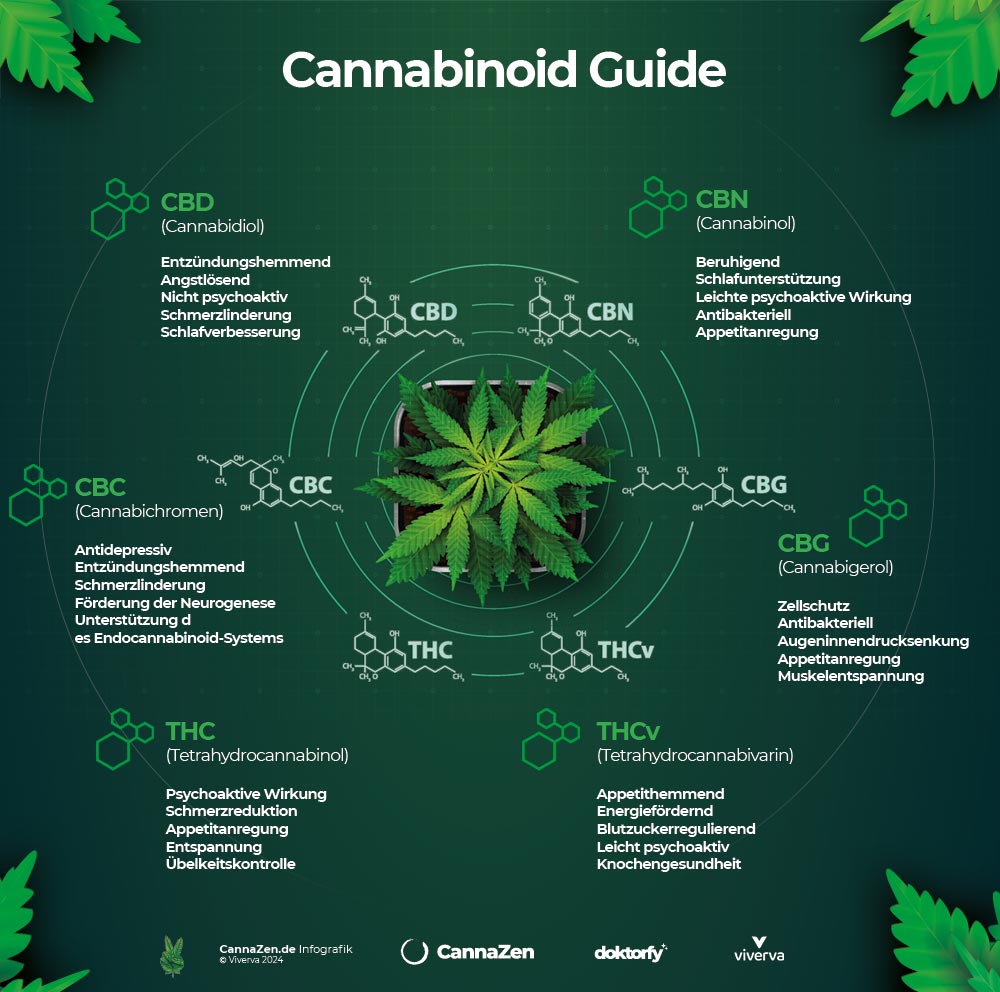
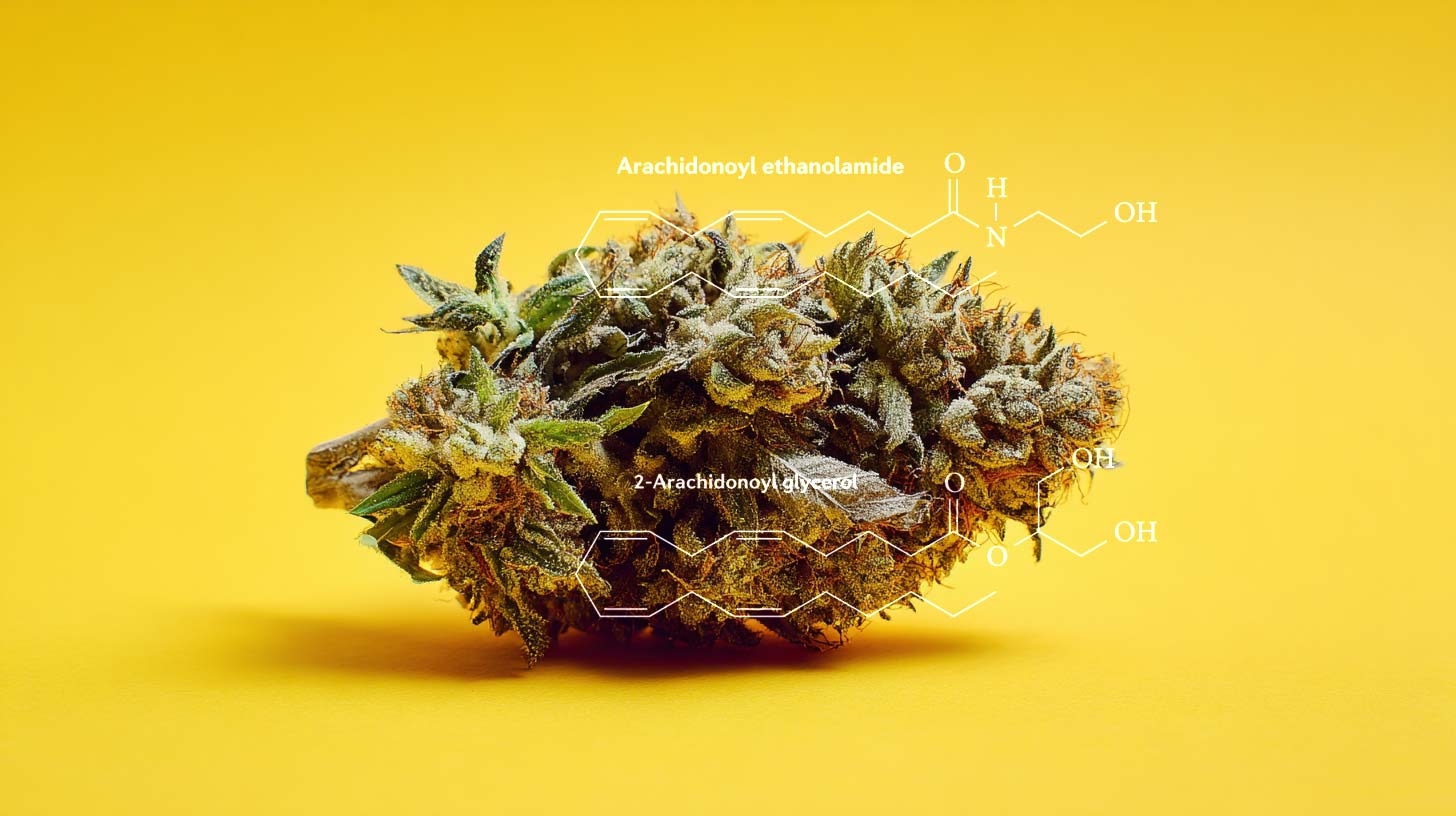
Δ9-THC binds to CB1 receptors in the brain and CB2 receptors in the immune system. As a result, it influences the endocannabinoid system and alters processes such as pain perception, mood, appetite and memory. The effect depends on the dose, strain and form of consumption and can be relaxing, mood-enhancing or even activating.
While Δ9-THC has the strongest psychoactive effect,
Δ8-THC is considered milder and more relaxing.
Δ10-THC is often associated with more energy and focus.
CBD, on the other hand, does not have an intoxicating effect, but rather a calming and anti-inflammatory one.
Δ9-THC is the “classic” THC form – strong, versatile and the basis for most medical THC products.
Remember Δ9-THC and its special features:
Δ9-THC is the most common and best-known form of THC
Strongly psychoactive and versatile
Has great medical potential
Δ9-THC and the entourage effect
Δ9-THC plays a central role in the “entourage effect“. As described, together with CBD, Δ8-THC, Δ10-THC and other cannabinoids, the effects reinforce or complement each other. For medical applications, flowers and extracts are therefore specifically selected to achieve the optimum balance of THC and other active ingredients.
This makes Δ9-THC the most important cannabinoid for psychoactive effects and a central substance in medical cannabis research.
Cannabis effects: cannabinoids, terpenes and genetics
Cannabinoids, terpenes and genetics: Learn everything you need to know about medicinal cannabis on CannaZen.
Medical Disclaimer: The information on this page is for educational purposes only and does not constitute medical advice. Always consult a licensed healthcare professional before starting any new treatment.
We may request cookies to be set on your device. We use cookies to let us know when you visit our websites, how you interact with us, to enrich your user experience, and to customize your relationship with our website.
Click on the different category headings to find out more. You can also change some of your preferences. Note that blocking some types of cookies may impact your experience on our websites and the services we are able to offer.
Essential Website Cookies
These cookies are strictly necessary to provide you with services available through our website and to use some of its features.
Because these cookies are strictly necessary to deliver the website, refusing them will have impact how our site functions. You always can block or delete cookies by changing your browser settings and force blocking all cookies on this website. But this will always prompt you to accept/refuse cookies when revisiting our site.
We fully respect if you want to refuse cookies but to avoid asking you again and again kindly allow us to store a cookie for that. You are free to opt out any time or opt in for other cookies to get a better experience. If you refuse cookies we will remove all set cookies in our domain.
We provide you with a list of stored cookies on your computer in our domain so you can check what we stored. Due to security reasons we are not able to show or modify cookies from other domains. You can check these in your browser security settings.
Google Analytics Cookies
These cookies collect information that is used either in aggregate form to help us understand how our website is being used or how effective our marketing campaigns are, or to help us customize our website and application for you in order to enhance your experience.
If you do not want that we track your visit to our site you can disable tracking in your browser here:
Other external services
We also use different external services like Google Webfonts, Google Maps, and external Video providers. Since these providers may collect personal data like your IP address we allow you to block them here. Please be aware that this might heavily reduce the functionality and appearance of our site. Changes will take effect once you reload the page.
Google Webfont Settings:
Google Map Settings:
Google reCaptcha Settings:
Vimeo and Youtube video embeds:
Other cookies
The following cookies are also needed - You can choose if you want to allow them:
Privacy Policy
You can read about our cookies and privacy settings in detail on our Privacy Policy Page.