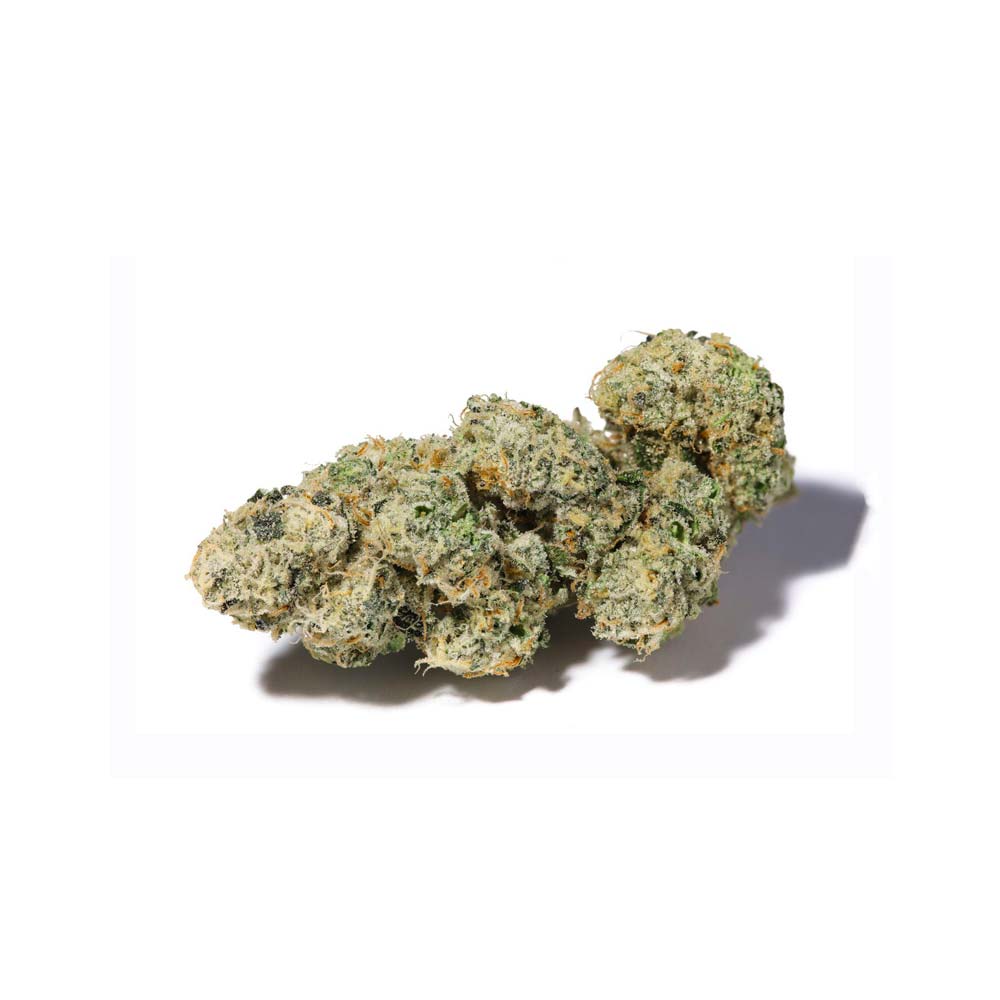
Headband is a well-regarded hybrid cannabis strain that has gained significant popularity among medical cannabis users in the UK and internationally. The strain is a cross between Sour Diesel and Master Kush, two legendary parent strains that contribute distinct characteristics to Headband’s profile. This genetic lineage gives Headband its balanced hybrid nature, leaning slightly towards sativa dominance.
The strain gets its distinctive name from the reported sensation of pressure around the head and temples that many users experience, often described as feeling like wearing a tight headband. This is a characteristic effect of the strain’s cannabinoid profile and has become iconic amongst those familiar with it.
Headband flowers are typically dense, with a light green colouration and generous trichome coverage. The buds often display orange pistils and a frosty appearance, indicating good cannabinoid concentration. For UK medical patients seeking information about accessing strains like this, understanding the legal framework is essential—more details can be found at /medical-cannabis-uk/.
2. THC and CBD Percentages
Headband is a THC-dominant strain with realistic cannabinoid ranges varying depending on cultivation methods and phenotype. Most quality samples contain between 18-25% THC, with some premium cultivations reaching up to 26%. The CBD content is typically very low, ranging from 0.1-0.5%, making this strain unsuitable for patients seeking high-CBD products.
These concentrations mean Headband is best suited to experienced medical cannabis users or those with established THC tolerance. Patients new to medical cannabis should start with lower-THC options or use this strain in smaller quantities under professional guidance.
3. Effects and Experience
The experience of Headband is distinctly cerebral, with effects typically manifesting within minutes of consumption. Users commonly report initial euphoria and mental clarity, followed by a sustained sense of calm focus. The characteristic “headband” sensation—a gentle pressure around the head and temples—usually emerges 15-30 minutes after use.
Beyond euphoria, Headband provides noticeable relaxation without heavy sedation, making it suitable for daytime or early evening use for most patients. Many report enhanced focus and creative thinking, though some find that higher doses induce mild couch-lock. The mental effects tend to remain prominent throughout the experience, with physical relaxation building gradually.
Users often describe improved mood, reduced mental chatter, and a sense of calm confidence. The strain rarely produces paranoia or anxiety in tolerant users, though newcomers should approach cautiously.
4. Medical Uses and Therapeutic Applications
For UK medical cannabis patients, Headband offers potential benefits across several conditions:
Chronic Pain: The combination of physical relaxation and mental distraction makes Headband effective for chronic pain management, particularly neuropathic pain and migraines.
Anxiety and Stress: The euphoric and uplifting properties can help reduce anxiety without the heaviness associated with sedative strains.
Depression: The mood-elevating effects are beneficial for patients with depression or low mood disorders.
Focus-Related Issues: Unlike sedating strains, Headband’s cerebral nature may help patients with ADHD or concentration difficulties, though individual responses vary.
PTSD: Some patients report symptom relief, though clinical evidence remains limited.
Appetite: Headband may mildly stimulate appetite, making it potentially useful for cachexia or appetite loss.
5. Availability in UK Pharmacies and Private Prescription
Headband is not currently available through NHS prescriptions in the United Kingdom. However, it may be accessible through private medical best UK cannabis clinics via private prescription. Availability varies significantly between providers and often depends on current stock and cultivation partnerships.
Patients interested in accessing Headband legally should consult specialist clinics registered to prescribe medical cannabis. For comprehensive information about finding appropriate clinics, visit /best-cannabis-clinics-uk/. Private prescriptions typically cost between £150-300 monthly, depending on the clinic and dosage requirements.
6. Growing Information
Headband can be cultivated both indoors and outdoors, though indoor growing allows better environmental control. Indoor plants typically flower within 8-9 weeks, whilst outdoor plants mature by late September or early October in UK climates.
The strain demonstrates moderate vigour and can reach medium heights. Indoor yields typically range from 400-500g per square metre under optimal conditions, whilst outdoor yields depend heavily on weather and location, generally producing 300-400g per plant.
Headband prefers warm, humid conditions during vegetative growth and cooler, drier conditions during flowering. Adequate ventilation is important to prevent mould in UK’s damp climate.
7. Similar Strains Available in the UK
UK medical patients unable to access Headband might consider similar alternatives: Sour Diesel (a parent strain, offering comparable cerebral effects), Master Kush (the other parent, providing more relaxation), Girl Scout Cookies (similar euphoric profile), or Haze variants (offering comparable uplifting effects with longer-lasting benefits).
Frequently Asked Questions
Is Headband suitable for morning use?
For many patients, Headband’s cerebral and uplifting effects make it suitable for morning or daytime use. However, individual responses vary—some experience drowsiness. Start with lower doses to assess your personal response.
Can Headband help with sleep?
Headband is not ideal as a primary sleep aid due to its sativa-dominant, uplifting nature. Indica-dominant strains are generally more appropriate for sleep-related issues. However, some patients use it in the early evening to relax before transitioning to sleep aids.
How does Headband compare to prescription opioids for pain?
Many patients report preference for Headband due to reduced side effects, though efficacy varies individually. Some benefit from combined approaches. Always consult your prescribing clinician before making changes to pain management protocols.
Medical Disclaimer: The information on this page is for educational purposes only and does not constitute medical advice. Always consult a licensed healthcare professional before starting any new treatment.
https://cannazen.co.uk/wp-content/uploads/2026/01/cosmic-mac-cannabis-doctor-prescription-pharmacy-shop-blute.jpg10001000CannaZen UK Editorial Teamhttps://cannazen.co.uk/wp-content/uploads/2026/01/cannazen-shop-lieferung-cannabis-weed-hemp-online.svgCannaZen UK Editorial Team2026-05-14 21:20:572026-05-23 10:50:48Headband Strain UK: OG Kush x Sour Diesel Hybrid Guide
We may request cookies to be set on your device. We use cookies to let us know when you visit our websites, how you interact with us, to enrich your user experience, and to customize your relationship with our website.
Click on the different category headings to find out more. You can also change some of your preferences. Note that blocking some types of cookies may impact your experience on our websites and the services we are able to offer.
Essential Website Cookies
These cookies are strictly necessary to provide you with services available through our website and to use some of its features.
Because these cookies are strictly necessary to deliver the website, refusing them will have impact how our site functions. You always can block or delete cookies by changing your browser settings and force blocking all cookies on this website. But this will always prompt you to accept/refuse cookies when revisiting our site.
We fully respect if you want to refuse cookies but to avoid asking you again and again kindly allow us to store a cookie for that. You are free to opt out any time or opt in for other cookies to get a better experience. If you refuse cookies we will remove all set cookies in our domain.
We provide you with a list of stored cookies on your computer in our domain so you can check what we stored. Due to security reasons we are not able to show or modify cookies from other domains. You can check these in your browser security settings.
Google Analytics Cookies
These cookies collect information that is used either in aggregate form to help us understand how our website is being used or how effective our marketing campaigns are, or to help us customize our website and application for you in order to enhance your experience.
If you do not want that we track your visit to our site you can disable tracking in your browser here:
Other external services
We also use different external services like Google Webfonts, Google Maps, and external Video providers. Since these providers may collect personal data like your IP address we allow you to block them here. Please be aware that this might heavily reduce the functionality and appearance of our site. Changes will take effect once you reload the page.
Google Webfont Settings:
Google Map Settings:
Google reCaptcha Settings:
Vimeo and Youtube video embeds:
Other cookies
The following cookies are also needed - You can choose if you want to allow them:
Privacy Policy
You can read about our cookies and privacy settings in detail on our Privacy Policy Page.